Best Weight Loss Diets for Dogs: Five Food and Support Options
The best weight loss diet for a dog is a measured, complete-and-balanced food that fits the dog’s life stage and calorie needs, with portions set in consultation with a veterinarian. Hill’s Science Diet Perfect Weight dry and wet foods are targeted weight-management options; Blue Buffalo Healthy Weight is designed for small adult dogs. Hill’s small-bites formula may suit dogs that prefer smaller kibble, while Wonder Paws chews are a supplement—not a weight-loss diet.
| Product | Best For | Format |
|---|---|---|
| Hill’s Perfect Weight Small Bites | Small-kibble preference | Dry food |
| Hill’s Perfect Weight Dry | Adult dogs needing a weight-focused kibble | Dry food |
| Hill’s Perfect Weight Wet | Dogs that eat wet food | Wet food |
| Wonder Paws Cardio Support | Owners seeking supplemental heart-support ingredients | Soft chews |
| Blue Buffalo Healthy Weight Small Dog | Small adult dogs | Dry food |
Hill’s Perfect Weight Small Bites

This adult dry food is best for owners looking for a weight-management formula in a small-bites format. Its listed features describe a formula intended to support healthy metabolism and body weight, made with natural ingredients. The product information also states that visible results may occur within 10 weeks; individual outcomes can vary and depend on feeding amounts, activity, and other factors.
Choose this option if your dog does better with smaller kibble and a dry-food routine. It was selected because it directly targets adult weight management rather than offering only general nutrition. Follow the package’s feeding directions as a starting point and ask a veterinarian to set a suitable calorie target. A small-bites format does not, by itself, make the food appropriate for every dog.
Hill’s Perfect Weight Dry Food
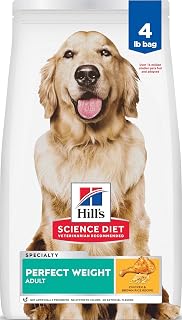
Hill’s Perfect Weight dry food is best for adult-dog owners who want a kibble specifically positioned for weight management. The listed features say its formula is designed to support healthy metabolism and body weight and is made with natural ingredients. The product description reports visible results within 10 weeks, but that is not a guaranteed timeline for every dog.
This is a useful comparison choice for households that prefer dry food but do not need the small-bites version. Measure each serving rather than estimating by eye, and account for treats and table scraps in the daily food total. Avoid switching abruptly if your dog has a sensitive stomach; ask your veterinarian how to transition and whether this adult formula suits your dog’s health needs.
Hill’s Perfect Weight Wet Food

This wet option is best for adult dogs that eat canned food or for owners who want a wet format in a weight-management product. Its listed features describe clinically proven weight-management food intended to support healthy weight maintenance and long-lasting weight support. It includes added vitamins, minerals, and amino acids, according to the product information.
Choose wet food if its texture works better for your dog or fits your feeding routine. It was selected to give shoppers a non-kibble option within the same weight-focused product group. Check the feeding directions for the amount appropriate to your dog, especially if combining wet food with kibble. Do not assume that mixing formats automatically preserves a calorie-controlled plan.
Wonder Paws Cardio Support Chews

These soft chews are best for owners seeking a supplemental product featuring L-carnitine, taurine, CoQ10, and hawthorn berry for cardiovascular support. The product description also mentions circulation, energy, and weight management. They are included as a supporting option, not as a replacement for a complete dog food or a veterinarian-guided weight plan.
Choose this product only if a veterinarian agrees that a supplement is appropriate for your dog. The listed ingredients and claims do not establish that the chews cause weight loss or treat a heart condition. The main limitation is that a supplement does not control daily calories; feeding portions and activity still matter.
Blue Buffalo Healthy Weight Small Dog

This dry food is best for owners of small adult dogs seeking a food formulated for weight management. Its listed features identify real chicken as the first ingredient and describe balanced nutrition with an intended caloric balance for small breeds. The product information also says the formula was developed by veterinarians and animal nutritionists.
It was selected because its small-dog focus distinguishes it from the broader adult options in this list. Compare the feeding directions with your veterinarian’s calorie target rather than relying on the phrase “healthy weight” alone. This product is specifically described for small adult dogs, so avoid assuming it is the right choice for a puppy or a dog outside that group.
Buying Guide: How To Choose A Dog Weight-Loss Diet
What should a weight-management food provide?
Look for a complete food suited to your dog’s life stage, with clear feeding directions and a calorie amount you can compare with your veterinarian’s plan. “Weight management” on a label does not replace portion control. Your dog’s age, size, current body condition, health, and activity level all affect the right daily amount.
Should you choose dry or wet food?
Choose a format your dog will reliably eat and your household can measure consistently. Dry food can be portioned with a measuring tool; wet food provides an alternative texture and feeding format. If combining the two, count both toward the daily total instead of feeding a full serving of each.
How should portions and treats be managed?
Use the package directions as a reference, then confirm the daily target with a veterinarian. Measure meals consistently and include treats, chews, and food used for training in the daily intake. Avoid making large reductions without professional guidance, particularly for dogs with medical conditions or special dietary needs.
When should you ask a veterinarian?
Ask before starting a weight-loss plan if your dog has a health condition, takes medication, is very young or old, or has gained weight unexpectedly. A veterinarian can assess body condition, recommend a suitable pace, and help determine whether a food or supplement fits the dog’s needs.
Frequently Asked Questions
How do I know if my dog needs to lose weight?
A veterinarian can assess your dog’s body condition and determine whether weight loss is appropriate. Appearance alone may not account for breed, build, or health status.
Can a weight-management food cause weight loss by itself?
No food guarantees weight loss by itself. Results depend on suitable portions, total daily calories, activity, and the dog’s individual needs.
Can I give my dog both wet and dry food?
Wet and dry foods can be combined when appropriate, but both portions must fit the daily calorie plan. Ask your veterinarian how to calculate the combined amount.
Are cardio support chews a substitute for diet food?
No. The Wonder Paws chews are a supplement, not a complete weight-loss diet. Discuss supplements with a veterinarian before adding them.
How quickly should a dog lose weight?
The safe pace depends on the dog’s condition and health. Have a veterinarian set a target and monitor progress rather than relying on a promised timeline.