Best UVB Bulbs for Chameleons: Five Options for Tropical Habitats
The best UVB bulb for a chameleon depends on the animal’s species, enclosure, and distance from the light. For many tropical setups, a 5.0 bulb is a more relevant starting point than a 10.0 desert bulb, but the label alone does not establish the UVB reaching the basking area. The options below include compact fluorescent and LED-style products, plus a higher-output bulb for keepers whose setup and care plan call for it.
| Product | Best suited for | Notable feature |
|---|---|---|
| zoo 5.0 13W | Basic tropical setups | Compact fluorescent bulb |
| GREENPAW 5.0 15W | Buyers wanting a UV presence card | Includes UV test card |
| Jugbuy 10.0 23W, two-pack | Setups specifically requiring higher output | Two bulbs; desert-rated output |
| zoo 4.5W 5.0 LED | Low-heat tropical enclosures | LED design and stated output at 30 cm |
| REPTI ZOO 5.0 15W, two-pack | Keepers who want a spare | Two-bulb bundle |
zoo 5.0 13W UVB Bulb
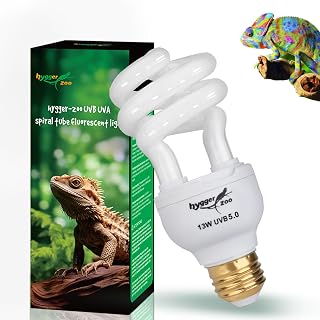
This compact fluorescent bulb is listed as a 5.0 UVA/UVB light for tropical reptiles, including chameleons. Its features describe a quartz-glass construction, heat dissipation, and a design intended to provide stable light output. It is best for a keeper seeking a straightforward tropical-category bulb rather than a higher-output desert bulb.
Why it was selected: Its 5.0 designation and stated tropical-reptile use make it directly relevant to chameleon habitat searches. The listing does not provide a measured UV index for a particular distance, so choose it only after checking the expected output in your enclosure. Do not treat visible brightness as proof of adequate UVB.
GREENPAW 5.0 15W Bulb With UV Card

GREENPAW’s compact fluorescent bulb is listed with 5% UVB and 30% UVA output for tropical and subtropical species. Its included UV sensor card is intended to show whether UV is present. This is best for buyers who want a basic indicator alongside the bulb, particularly when they are keeping track of whether a lamp is emitting UV.
Important limitation: The product information says the card indicates presence, not exact UVB levels. It cannot confirm that the basking area receives the appropriate exposure. The listing recommends replacing the bulb every 6–12 months; follow the product directions and use a suitable measurement method when available.
Jugbuy 10.0 23W UVB Bulbs, Two-Pack

This two-pack contains 23W compact fluorescent bulbs labeled 10.0, with stated 10% UVB and 30% UVA output. The listing describes them as suitable for desert reptiles and names chameleons among many possible species. It is best for a keeper whose species-specific care guidance and enclosure measurements call for this stronger category—not as an automatic choice for every chameleon.
Limitation: The desert-oriented 10.0 designation may not suit a tropical setup without careful planning. The listing specifies an E26 base and 110–130V voltage, so check fixture requirements before buying. Match the bulb’s output to the animal’s needs and the lamp-to-basking distance.
zoo 4.5W 5.0 LED UVB Bulb

This LED-style option is listed with a 4.5W array, 5% UVB, UVA, and warm-white lighting. The product states an output of 30 μW/cm² at 30 cm and a surface temperature below 38°C. It is best for a buyer considering a low-heat light for a tropical enclosure, especially where keeping leaf litter cool is a priority.
Limitation: The stated output is tied to a specific distance; output at other distances or through enclosure materials may differ. Confirm that the bulb and fixture are appropriate for the chameleon’s setup. The listing describes it as a UVB light, not a heat lamp, so it should not be expected to provide basking heat.
REPTI ZOO 5.0 15W Bulbs, Two-Pack

This bundle includes two 15W compact fluorescent bulbs described as 5.0 UVB and 30% UVA for tropical reptiles. The listing gives a lifespan of up to 10,000 hours. It is best for keepers who want a replacement bulb on hand, or who prefer purchasing a two-pack for ongoing care.
Limitation: A stated lifespan does not tell you the UVB level reaching the basking area over time. The product description does not provide a measured UV index at a specified distance, so plan to monitor actual enclosure conditions rather than relying on the visible glow alone.
Buying Guide: How To Choose A Chameleon UVB Bulb
Should you choose 5.0 or 10.0?
Use the bulb category that fits the chameleon’s species-specific care requirements and enclosure layout. A 5.0 bulb is the more directly tropical-oriented option among these products. A 10.0 bulb is marketed for desert conditions and should not be selected solely because a higher number sounds better.
Does distance and enclosure material matter?
Yes. The UVB that reaches the animal depends on placement and barriers between the lamp and basking area. Mesh, distance, and fixture setup can affect exposure. Compare product output at the intended distance, and use an appropriate UV index measurement rather than judging by visible light or a presence-only card.
Do you need a separate heat lamp?
Not every UVB bulb provides useful basking heat. The zoo 4.5W LED listing specifically says it is not a heat lamp. Plan UVB lighting and temperature control as separate needs unless the chosen product clearly states otherwise.
What should you check before ordering?
Confirm the bulb type, fixture base, voltage where provided, enclosure dimensions, mounting distance, and replacement guidance. Also verify that the product’s stated use fits the animal’s care plan. Keep a record of installation dates so a bulb’s visible light does not create false confidence about UVB output.
Frequently Asked Questions
Can a chameleon use a 5.0 UVB bulb?
These listings market 5.0 bulbs for tropical reptiles, including chameleons. Whether a particular bulb is suitable depends on species, distance, and enclosure conditions.
Is a 10.0 bulb better than a 5.0 bulb?
Not automatically. The 10.0 option is described as desert-oriented, while the 5.0 options are marketed for tropical species. Choose based on the animal’s care requirements and measured exposure.
Does a UV test card measure UVB strength?
No. The GREENPAW listing says its card indicates UV presence, not the exact UVB level reaching the chameleon.
Can an LED UVB bulb replace a heat lamp?
Not based on the zoo LED listing, which says it is not a heat lamp. Provide heat separately if the enclosure’s care plan requires it.
How often should I replace a UVB bulb?
Replacement timing varies by product. Follow the bulb’s instructions; GREENPAW recommends 6–12 months, while other listings state different lifespan information.