Best Underground Pet Containment Systems for Safe, Wire-Free Yards
If you’re seeking an underground or wireless containment option for your dog, this guide highlights five strong choices that cover a range of yard sizes and training needs. Each product is presented with who it’s best for, what makes it stand out, and a practical limitation to consider. The aim is to help you pick a reliable, maintenance-friendly solution that fits your property and your dog’s training style.
| Product | Best For | Key Benefit |
|---|---|---|
| PetSafe Wireless Pet Containment System | Small-to-mid yards, first-time wireless users | No wires to bury; circular boundary |
| PetSafe Stubborn Dog In-Ground Fence | Persistent or stubborn dogs | Customizable 1/3-acre area with expandability |
| Electric Dog Fence (Aboveground/Underground) | Medium yards, multiple dogs | Combination of wire and wireless options; adjustable illumination |
| GPS Wireless Dog Fence (2 Dogs) | Large outdoor spaces; irregular layouts | GPS-based, no buried wire |
| PetSafe Stay & Play Wireless Fence | Hard-to-train dogs; moderate yard | Tone mode plus static correction |
PetSafe Wireless Pet Containment System, Up To 1/2 Acre

This system provides a circular, wireless boundary suitable for yards up to about 1/2 acre. It uses a portable indoor transmitter and a proprietary boundary that guides your dog back to the play area. It’s ideal for first-time users who want a quick setup with minimal digging or wiring. Best for small-to-medium yards and dogs that respond well to tone and static correction.
Best for: First-time wireless adopters, dogs under medium energy levels, homes without outdoor wiring projects.
Caution: Limited expansion potential beyond the included transmitter; consider a second transmitter only if your yard grows significantly.
PetSafe Stubborn Dog In-Ground Fence, Up to 1/3 Acre

Designed for dogs that are persistent or hard to train, this system offers a 1/3-acre safe zone with 500 feet of included boundary wire. It’s expandable to much larger properties by adding more wire, making it a strong choice for dogs that push against boundaries. It supports multiple correction modes and allows tone-plus-vibration to aid training.
Best for: Persistent or stubborn dogs; homes that anticipate yard expansion. Why selected: strong training options with tunable corrections and a large expansion path.
Caution: Requires some initial installation work and orderly wire management; consider if you prefer a fully wireless setup.
Electric Dog Fence (Aboveground/Underground) With 3/4 Acre Coverage

This system offers an aboveground/underground hybrid design covering up to about 3/4 acre with 650 feet of wire included. It includes a rechargeable, IP66-rated waterproof collar suitable for outdoor use, and supports dogs weighing 12–150 pounds. It’s a practical option for households with mixed terrain or where waterproof reliability is essential.
Best for: Small-to-mid-sized yards with mixed terrain; dogs that enjoy outdoor water play. Why selected: robust weather resistance and flexible wire options.
Caution: Marketing text notes varying performance across dogs; proper training is essential to prevent escape during initial setup.
GPS Wireless Dog Fence for 2 Dogs
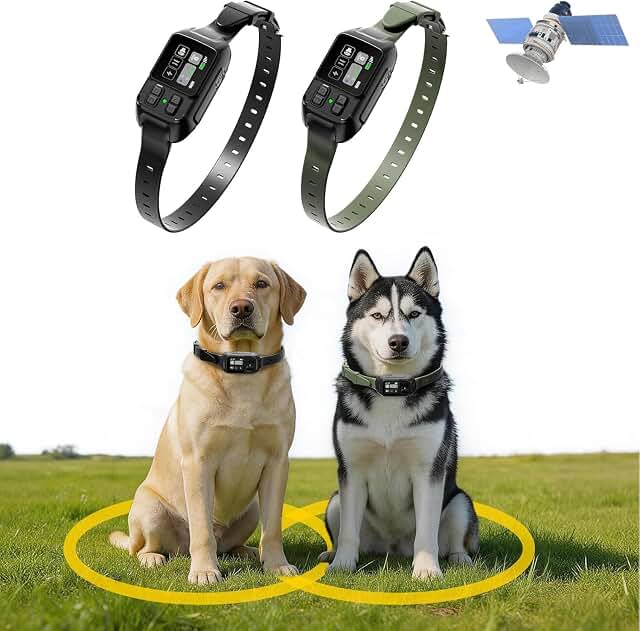
This GPS-based system creates virtual boundaries without buried wires and supports two dogs. It provides adjustable circular or custom fence modes, making it versatile for irregular property shapes. Correction options include beeps, vibration, and static shocks with configurable levels to support training without overcorrection. Best for large, open spaces where traditional wiring is impractical.
Best for: Homes with large properties or irregular layouts; multi-dog households seeking flexible boundary shapes. Why selected: GPS technology offers scalable, wire-free containment over large areas.
Caution: GPS-based boundaries can be affected by signal obstructions; plan for external factors like dense foliage or tall structures.
PetSafe Stay & Play Wireless Fence for Stubborn Dogs

Geared toward persistent pets, this wireless system supports up to 3/4 acre and offers tone-only mode plus five levels of static correction. It emphasizes quick setup and wire-free boundaries, making it a practical choice for owners who want fast deployment and adjustable training for challenging dogs.
Best for: Hard-to-train dogs; owners who want a portable setup for temporary spaces or travel. Why selected: strong balance of tone guidance and scalable static correction for tough cases.
Caution: Wireless boundaries may require recalibration when moving indoors or to different outdoor areas; ensure consistent testing during training sessions.
Buying Guide: Key Purchase Considerations
What yard size and shape do you have? Wireless systems are ideal for smaller, regular spaces, while GPS and hybrid systems suit larger or irregular properties. Consider expansion potential if your yard may grow.
How trainable is your dog? Dogs that respond well to tone and low-level static correction are good candidates for wireless models. For persistent dogs, models with multiple correction levels offer better outcomes.
What weather and terrain does your property present? Waterproof collars and IP-rated components are important for outdoor use. Elevated or hilly yards may benefit from GPS or larger boundary ranges.
Do you value quick setup over long-term wiring? Wireless options provide fast deployment with minimal maintenance. In-ground systems require more initial installation but can offer stable performance in areas with dense ground cover.
Number of dogs and expansion needs: If you have more than one pet, look for expandable systems or multi-dog compatibility, and assess wiring requirements and costs for growth.
Frequently Asked Questions
- What is the primary difference between wireless and in-ground fences?
– Wireless fences use signals to guide pets within a circular boundary without buried wires, offering quick setup. In-ground fences use buried wires to define precise borders, often suitable for irregularly shaped yards and multi-dog households. - Can these systems be used for dogs of all sizes?
– Most systems support a wide range of weights, but always check neck size, collar fit, and correction levels to match your dog’s needs. - Are GPS-based fences more reliable than traditional wire systems?
– GPS fences can handle large or irregular spaces without wiring, but signal quality and environmental factors may affect accuracy. Wired or proprietary wireless systems can offer more consistent boundaries in some settings. - What maintenance is typical for these systems?
– Regular battery checks, collar cleaning, and boundary testing are recommended. Ensure transmitters or base units stay powered and aligned with the boundary settings. - How do I choose the right boundary shape for my yard?
– For simple yards, circular wireless boundaries are convenient. For irregular shapes, consider GPS “custom fence” modes or expandable in-ground options that allow molding to the property. - Is professional installation necessary?
– Most systems are designed for DIY setup. Complex terrain or multi-dog configurations may benefit from professional guidance, especially for optimal boundary calibration.