Best Turtle Basking Light Bulbs for Healthy Reptile Thermoregulation
Choosing the right basking light is essential for turtles and other reptiles to maintain proper body temperature, appetite, and daily activity. The following selections focus on reliable UVA/heat output, long-lasting bulbs, and compatibility with standard fixtures. This guide highlights five top options and a practical buying guide to help you compare features such as wattage, UV exposure, and reliability.
| Product | Brand | Watts | Key Benefit |
|---|---|---|---|
| ReptiKing Basking Light 2-Pack | ReptiKing | 100W | Intense basking spot with UVA support |
| ReptiKing Daylight Basking Spot 2-Pack | ReptiKing | 100W | Daylight cycle for healthy growth |
| LUCKY HERP Reptile Heat Lamp 100W (2nd Gen) | LUCKY HERP | 100W | Efficient heating and UVA simulation |
| Fluker’s Basking Spotlight Bulbs | Fluker’s | 60W | Directed heat and infrared light |
| MCLANZOO Reptile Heat Lamp 75W | MCLANZOO | 75W | Natural daylight and warm basking area |
ReptiKing Basking Light 100W 2-Pack

The ReptiKing 2-Pack 100W Basking Light is designed to create a distinct hot basking zone in terrariums, enabling thermoregulation for reptiles such as turtles. The bulb’s narrow, high-density beam provides a 35% increase in heat intensity and UVA emission to mimic direct sunlight. This supports healthier growth and breeding by simulating natural conditions. It can be combined with other heat sources to support a 24-hour cycle, including night heat lamps and ceramic emitters, making it versatile for day-night temperature management.
ReptiKing Reptile Heat Bulb 100W Daylight 2-Pack

This 2-pack provides a daylight basking light designed to establish a daytime light cycle that supports growth and breeding. The bulb creates a warm, basking area for thermoregulation and helps reptiles transition between hot and cold zones within the terrarium. It’s compatible with various setups for 24-hour cycles when paired with other heat sources, ensuring consistent environmental conditions for turtles, bearded dragons, and similar species.
LUCKY HERP Reptile Heat Lamp 100W (2nd Gen)
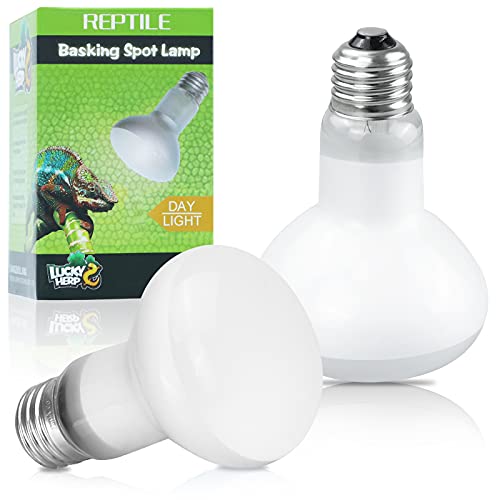
LUCKY HERP’s 100W 2nd Gen heat lamp emphasizes efficient heating and UVA-simulated daylight. It creates a dedicated basking area, enabling reptiles to regulate their body temperature while maintaining natural behaviors such as appetite and activity. The bulb’s construction aims for durability, with a claimed life of up to 2000 hours, and it’s designed to integrate with other heat sources for a 24-hour cycle. This makes it a practical option for varied terrarium setups and species like turtles and lizards.
Fluker’s Basking Spotlight Bulbs

Fluker’s 60W Basking Spotlight Bulbs direct heat and light toward a specific basking area, aiding in core body temperature regulation for reptiles. The bulb emits infrared light essential for maintaining warm conditions, which is particularly beneficial for nocturnal or cooler microclimates within terrariums. While lower wattage than some 100W bulbs, its targeted heat makes it suitable for smaller setups or sections of larger enclosures where precise basking zones are needed.
MCLANZOO Reptile Heat Lamp 75W 2 Pack

The MCLANZOO 75W 2-pack emphasizes efficient heating with UVA warmth to promote a natural appetite and digestion. It highlights long-term warmth for bearded dragons, turtles, tortoises, lizards, snakes, and other reptiles. The bulbs are designed to provide a warm basking area while supporting a long-term, stable temperature in the enclosure. This option suits mid-sized terrariums and can be paired with other lighting to create a 24-hour comfort cycle.
ReptiKing 75W Intense Basking Bulbs 2-Pack

ReptiKing’s 75W Intense Basking Bulbs pair delivers an amplified basking experience, focusing a higher-density beam to closely mimic direct sun exposure. These bulbs support both basking zone creation and UVA exposure to encourage growth and natural behaviors. Like other ReptiKing options, they are designed for compatibility with additional heat sources to maintain a 24-hour cycling environment, which is beneficial for turtles and other reptiles needing reliable thermoregulation.
Buying Guide
Key considerations when selecting a turtle basking light bulb include wattage, heat output, and UV spectrum. Higher wattage can produce more heat for larger enclosures, but smaller tanks may overheat with 100W bulbs. UVA exposure helps stimulate feeding, activity, and natural behaviors, while UVB is important for bone health—many reptile bulbs combine UVA with UVB, but verify product specs to ensure you’re meeting species needs. Durability and bulb lifespan affect maintenance: look for bulbs rated for thousands of hours and safety certifications. Compatibility with existing fixtures and the option to pair with night heat sources enables a 24-hour cycle, which many turtles require.
Consider enclosure size, thermostat compatibility, and whether you need a focused basking spot or broader illumination. For mixed terrariums housing turtles and lizards, a combination of a basking spotlight with a separate UVB source may be advantageous. If you keep multiple reptiles, 2-pack or 3-pack options offer consistent performance and easier replacement.
Safety should be a priority: monitor heat levels to avoid burns or overheating, keep bulbs away from water sources, and ensure cords and fixtures are secure. For species with sensitive skin or eyes, observe behavior after introducing a new bulb and adjust wattage or distance from the basking area as needed.
In summary, the best turtle basking light bulbs balance heat intensity, UVA exposure, and reliability while matching enclosure size and species needs. The options listed above provide a range of wattages and configurations to support healthy basking behavior, feeding, and growth in a typical home terrarium setup.