Best Small Puppy Crate Training Solutions for Quick Housebreaking
Answering the most common questions about crate training for tiny to small-breed puppies, this guide highlights the best crate options for safe confinement, comfortable space, and steady housebreaking progress. The top picks are suited for careful puppies, anxious beginners, and busy households needing reliable containment. Each product is evaluated for size appropriateness, safety features, and ease of use to help you pick the right crate for your puppy’s needs.
At-a-glance quick reference: the following table summarizes the five highlighted crates, their ideal puppy sizes, and a core reason to consider each. This helps you compare options at a glance as you read the detailed sections.
| Product | Best For | Why It Stands Out |
|---|---|---|
| Midwest 18-Inch Single Door iCrate | Tiny breeds up to 10 lbs | Compact size with durable build and secure latch |
| Amazon Basics Portable Small Dog Crate | Travel-ready puppies under 20 lbs | Lightweight, easy setup, quick fold-down |
| DUMOS 24 Inch Dog Crate | Small to mid-size puppies | Deep tray, rounded edges, easy cleaning |
| FXW Homeplus Indoor Dog Playpen | Growing puppies needing expansion | Semi-open, expandable panels for space |
| Midwest 24-Inch Pink iCrate | Small-to-medium breeds 12-20 lbs | Stylish finish with divider panel and secure latch |
Midwest 18-Inch iCrate for Tiny Breeds

This 18.5 x 12.5 x 14.5-inch crate is ideal for puppies under 10 pounds, such as a Maltese or Brussels Griffon. It provides just enough space for cozy containment without overwhelming a small pup. The design emphasizes safety with precision welding, rounded corner clips, and a slide-bolt Paw Block latch to reduce snags and escapes. A leak-proof tray and protective finish support easy cleaning and daily use. Best for travel-friendly setups, small apartments, or starter crate training in compact spaces.
Who it’s best for: new puppy owners seeking a compact, safe crate for tiny dogs and quick crate acclimation. Why selected: proven small-breed fit, sturdy construction, and easy assembly. Caution: dogs nearing 10 lbs may need the 22-inch model for comfortable movement and longer-term use.
Amazon Basics Portable Small Dog Crate
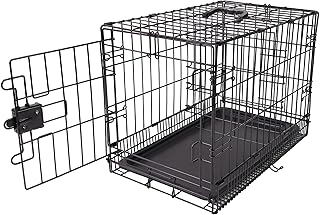
This 24-inch crate is designed for pets under roughly 20 x 15 inches, aligning well with small-breed puppies like a Havanese or Pug. It features a durable metal wire structure with a manual door locking mechanism to secure containment. The crate folds quickly for transport and storage and includes a top handle for comfortable carrying. It’s an accessible, budget-friendly option for families just starting crate training or needing a portable solution for travel and visits.
Who it’s best for: families prioritizing portability and quick setup. Why selected: simple, reliable security plus fold-flat design. Caution: not ideal for very anxious puppies who require extra enrichment or a larger, more open space for early sessions.
DUMOS 24 Inch Dog Crate

This 24-inch single-door crate focuses on safety and ease of cleaning. It uses rounded corners to minimize injuries and has a deep, leak-resistant plastic tray for quick cleanup after accidents. The large door opening supports comfortable entry and exit, and the heavy-duty locking latch provides secure confinement. Best for training routines that require a sturdy, easy-to-clean crate in both indoor and outdoor settings.
Who it’s best for: puppy owners who value durable construction and straightforward maintenance. Why selected: strong latch, big door, and easy tray-removal. Caution: ensure the crate fits the puppy’s current size to avoid excessive space leading to messy crate training if too large too soon.
FXW Homeplus Indoor Dog Playpen

This 24-inch high playpen offers a semi-open, expandable design that supports stress-free play and crate training progress as puppies grow. It can be extended with more panels to fit the space and dog size. The structure emphasizes safety with no sharp edges and solid construction to withstand jumping and exploration. It’s a flexible option when a crate alone isn’t enough for early training or separation cues.
Who it’s best for: households needing adjustable space for a growing puppy. Why selected: expandable design and stable construction. Caution: not a single crate; consider pairing with a small crate for nap times and containment when strict confinement is required.
Midwest 24-Inch Pink iCrate

This 24 x 18 x 19-inch crate is tailored for small-to-medium dogs in the 12-20 lb range. It includes a divider panel to accommodate growth from a puppy to a slightly larger dog without needing a second crate. The pink e-coat finish adds a stylish touch while maintaining rust resistance and durability. A secure slide-bolt latch ensures containment, and the tray is leak-proof for easier cleaning during crate training.
Who it’s best for: families with growing puppies who will benefit from a divider for space adjustment. Why selected: size versatility, attractive finish, and reliable safety features. Caution: consider a larger model if puppies exceed 20 lbs soon or require more horizontal space for comfortable turning.
Buying Guide: How to Choose the Right Crate for Tiny Puppy Training
- Size and growth: Start with a crate that fits your current puppy, but offers a divider or plan to upgrade as they grow. A crate that’s too large can hinder crate training, while one that’s too small will be uncomfortable.
- Safety features: Look for rounded corners, secure latches, non-toxic coatings, and leak-proof trays. These reduce injuries and simplify cleanup after accidents.
- Portability vs. stability: If you travel often or attend training sessions away from home, a foldable, lightweight crate is beneficial. For long-term home use, a sturdy crate with stability features is preferable.
- Material and durability: Metal wire crates with protective finishes resist rust and wear. Plastic crates can offer more confined environments and reduced noise, which benefits anxious puppies.
- Cleaning ease: Removable, leak-proof trays simplify daily cleaning. A crate that wipes down quickly helps maintain hygiene during the housebreaking phase.
- Expandable options: For puppies that quickly outgrow a standard crate, consider an expandable playpen or crates with divider panels. This supports a smooth transition without changing setups abruptly.
- Location and environment: Place crates in quiet, low-traffic areas. A crate should feel like a safe den, not a punishment, to encourage positive associations during training.
Frequently Asked Questions
- How should I size a crate for a small puppy? Answer: Start with a crate that allows your puppy to stand, turn around, and lie down comfortably with a little extra room for growth. Use dividers to adjust as they grow.
- Is a playpen better than a crate for training? Answer: A playpen offers more space, which is useful for supervised play and gradual independence. For strict containment and overnight sleep, a crate is typically preferred.
- How often should a puppy be in the crate during housebreaking? Answer: Use crate time for naps, nighttime, and occasional quiet periods. Start with short sessions and gradually increase as the puppy gains self-control.
- What features matter most for tiny breeds? Answer: Compact size, secure latches, ease of cleaning, and rust-resistant finishes. These support safe confinement and quick confidence-building during training.
- Should I buy a crate with a divider? Answer: Yes, a divider helps you adjust space as your puppy grows, reducing the need for multiple crates and supporting consistent training behavior.
- How do I introduce a crate to a puppy? Answer: Make the crate inviting with treats, a comfortable bed, and positive associations. Encourage short periods inside and gradually extend time as the puppy behaves calmly.