Best Flea Control for Cats: Safer Options and Buying Tips
The safest flea control for a cat is one chosen for the cat’s age, weight, health, and exposure, then used exactly as its label directs. For a labeled topical option, PetArmor Plus is best for routine monthly control; Cheristin is better suited to buyers seeking a fast-acting topical. The soybean-oil spray is an option for cats and home surfaces, while Vet’s Best is intended for the home, not direct application to a cat. Ask a veterinarian before relying on herbal drops or changing treatment.
| Product | Best suited for | Format |
|---|---|---|
| PetArmor Plus | Monthly flea and tick control | Topical |
| Cheristin | Fast-acting flea treatment | Topical |
| GoneNaturally spray | Cat and household treatment, following label | Spray |
| Vet’s Best Indoor Spray | Fleas and ticks in the home | Home spray |
| Puyrzoe drops | Buyers considering daily herbal support | Oral drops |
PetArmor Plus Monthly Topical

PetArmor Plus is a waterproof topical product with fipronil and (S)-methoprene. The product description says it kills fleas, flea eggs, larvae, ticks, and chewing lice for up to 30 days and starts killing fleas within 24 hours. It is listed for cats over 1.5 pounds and supplied as three doses.
Best for: Cat owners seeking a monthly topical that targets multiple flea life stages. It was selected because the described action includes eggs and larvae, not only adult fleas. Limitation: It is not listed for cats at or below 1.5 pounds; check the package directions and your veterinarian’s advice before applying.
Cheristin Fast-Acting Topical

Cheristin is a topical flea treatment. Its product details say it starts killing fleas in 30 minutes and kills 98–100% of fleas within 12 hours. The listed dose is for cats and kittens at least 8 weeks old and weighing 1.8 pounds or more; the product describes a one-size dose.
Best for: Owners prioritizing rapid flea kill and a product described as suitable for cats and kittens meeting its age and weight limits. Limitation: The supplied description focuses on fleas, so do not assume it provides tick control or protection against other parasites. Follow the label for repeat use.
GoneNaturally Soybean Oil Spray
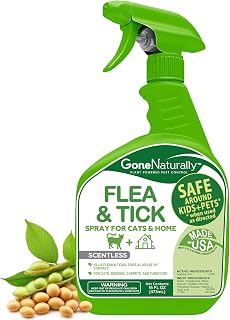
This scentless spray uses soybean oil as its active ingredient, according to the product description, and is marketed for cats over 12 weeks old. The listed uses include cat fur and household areas such as carpets, bedding, furniture, and cat trees. The description says it kills adult fleas, ticks, eggs, and larvae on contact.
Best for: Buyers looking for a spray intended for both a qualifying cat and flea-prone home surfaces. It was selected for that combined use and its stated lack of essential oils. Limitation: Avoid the eyes, nose, and genitals as directed. A contact spray may not replace a veterinarian-recommended preventive; verify directions for each surface and use.
Vet’s Best Indoor Home Spray
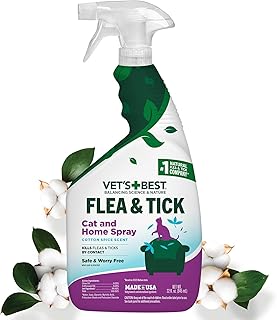
Vet’s Best is described as a home spray for areas including pet bedding, carpets, flooring, rugs, and drapes. Its plant-based formula is marketed to target fleas, ticks, mosquitoes, spiders, ants, and bed bugs. The product has a cotton spice scent and lists cottonseed and clove oil among its ingredients.
Best for: Owners addressing pests in household spaces rather than applying a product directly to the cat. It adds a home-treatment option to a flea-control plan. Limitation: This is a scented environmental spray, not a cat topical. Follow its label about application, ventilation, and keeping pets away from treated areas.
Puyrzoe Herbal Daily Drops

Puyrzoe is an oral daily product described as containing pumpkin seed, wormwood, chamomile, Pau d’Arco, echinacea, prebiotics, and omega fatty acids. The listing presents it as natural flea and tick prevention and says noticeable changes may occur within one to two weeks with daily use.
Best for: Buyers considering a daily herbal product for skin and coat support. It was included because it is marketed for cats and flea-related use. Limitation: The supplied information does not establish how reliably it prevents or eliminates infestations. Ask a veterinarian before using it instead of a proven preventive or combining it with medication.
Buying Guide: How to Choose Flea Control for a Cat
Which safety details should you check first?
Check the label for the cat’s minimum age and weight, application route, dose, repeat interval, and species. Never use a dog flea product on a cat unless a veterinarian explicitly confirms it is appropriate. Cats can be sensitive to some ingredients, and “natural” does not automatically mean safe. If your cat is very young, pregnant, nursing, ill, taking medication, or has reacted to flea products before, consult a veterinarian before treatment.
Should you choose a topical, oral product, or spray?
A topical may suit owners seeking scheduled treatment, while a spray may be useful for specific cat or household applications if its label permits them. Do not apply a home spray to a cat unless it is explicitly labeled for direct use on cats. Compare the product’s stated targets: flea-only claims are not the same as flea-and-tick coverage. Use only the dose and schedule on the label.
How should you address fleas in the home?
Flea eggs and larvae can be present away from the cat. Wash pet bedding as appropriate, vacuum regularly, and use any household treatment according to its directions. Keep the cat away from treated surfaces for the period stated on the label. Treating the environment can complement, but does not necessarily replace, a cat-specific preventive.
What if fleas persist or the cat reacts?
Contact a veterinarian if fleas remain despite correct use, if the cat develops irritation or illness, or if you are unsure whether products can be combined. Do not apply an extra dose to speed results. Keep product packaging available so a veterinarian can check the active ingredients and directions.
Frequently Asked Questions
What is the safest flea treatment for cats?
There is no single safest choice for every cat. Select a product labeled for the cat’s age and weight and ask a veterinarian when health conditions or other medications are involved.
Can I use dog flea treatment on my cat?
No. Do not use a dog flea product on a cat unless a veterinarian specifically directs you to do so.
Are natural flea products always safer?
No. Natural ingredients can still cause problems, and a natural label does not establish effectiveness or safety for an individual cat. Check ingredients and consult a veterinarian.
Can a home flea spray replace cat medication?
Not necessarily. A home spray targets the environment, while cat preventives are intended for the animal. Use each product only as labeled.