Best Saddle Pads for Sway Back Comfort and Fit
Finding a saddle pad that accommodates a sway back can improve rider stability and horse comfort. The following selections focus on pressure distribution, lift, and non-slip design to reduce bridging and soreness. Each product is chosen for the sway back scenario, with varied riser options and materials to suit different training needs.
| Product | Key Benefit |
|---|---|
| Kavallerie Gel Saddle Pad | Four riser options for customized support |
| Kavallerie Rear Riser Gel Saddle Pad | Rear-focused lift to reduce bridging |
| Kavallerie Middle Riser Gel Saddle Pad | Mid-back elevation for even pressure |
| Reinsman Shock Absorbing Square Swayback Contour | Contour design for sway back relief |
| Back on Track Therapeutic Western Pad | Welltex fabric for warmth and muscle relaxation |
Kavallerie Gel Saddle Pad

The Kavallerie Gel Saddle Pad is designed to support horses with back conditions that may lead to bridging. It offers four distinct gel pad options—Seat Saver, Middle Riser, Rear Riser, and Front Riser—to tailor cushioning and lift for specific ride styles. This pad aims to distribute pressure evenly across the back, potentially reducing discomfort during training or quick rides. The gel composition provides cushion while helping to minimize heat buildup from extended workouts.
Key features include a cloud-like gel layer to cushion the horse’s back and 100+ gel holes to promote airflow and reduce sweating. The soft yet durable materials help keep the saddle stable, aiming to minimize movement and friction that can irritate sensitive areas. This pad is positioned as a versatile option for eventing, schooling, dressage, and jumping practice where sway back concerns are present.
Kavallerie Rear Riser Gel Saddle Pad
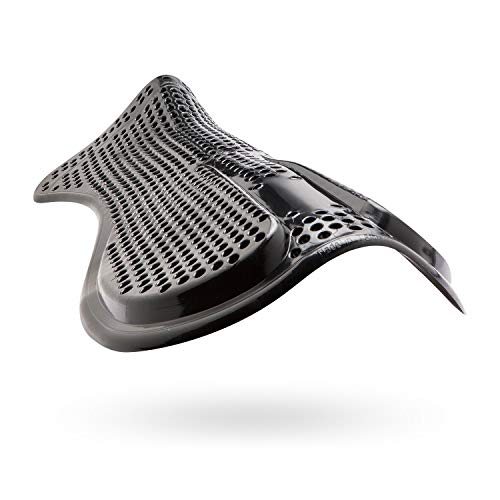
This rear-riser variant targets the back area most prone to bridging by providing additional lift where it matters. As with Kavallerie’s other gel pads, it emphasizes pressure distribution and comfort with a design that helps keep the saddle from sliding. The pad’s gel holes promote airflow to keep the back cooler during longer sessions or hot days, reducing irritation and heat buildup that can aggravate a sway back.
Usage notes highlight its suitability for eventing, schooling, and dressage. The cushion aims to deliver steady contact and reduce the likelihood of saddle roll by stabilizing the saddle’s position over the horse’s back. This makes it a strong option for riders seeking targeted support at the rear of the saddle.
Kavallerie Middle Riser Gel Saddle Pad

The middle-riser option provides elevation along the central back, aiming to fill gaps and reduce bridging through balanced lift. This can be beneficial when a sway back causes uneven contact with the saddle tree. The cushiony gel material and multiple gel holes help maintain airflow, reducing heat buildup and the risk of skin irritation during longer sessions.
Designed for eventing, schooling, and dressage, the middle riser pad seeks to offer dependable support across various disciplines without compromising saddle stability. The combination of soft materials and structural gel support supports consistent contact and comfort for both horse and rider.
Reinsman Shock Absorbing Square Swayback Contour

This square swayback contour pad is specifically designed to assist in fitting a saddle to a horse with a lower back curve, addressing bridging by distributing rider weight more evenly. Its 1.5-inch thick center foam tapers to the ends, leveling the saddle from front to rear and filling gaps. The Tacky Too bottom provides a non-slip surface that stays ventilated, helping prevent hair pulling and heat buildup while reducing padding movement.
For riders dealing with sway back or bridge issues, this pad offers a pragmatic approach to fit and stability. Its contour and thick center are intended to minimize pressure points, aiming to improve overall comfort during schooling and light jumping sessions.
Back on Track Therapeutic Western Pad
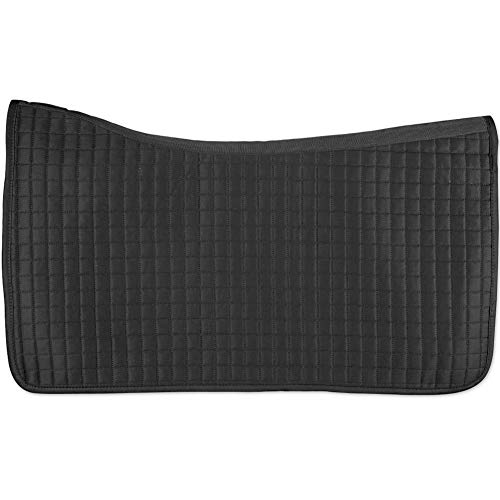
The Back on Track Western Pad is designed to be worn under a standard saddle pad, focusing on relaxing back muscles and warming up quickly. It uses Welltex fabric infused with ceramic powder, which reflects the horse’s natural warmth and provides soothing infrared thermal warmth. This therapeutic approach can help in loosening tight muscles and supporting comfort, which may benefit sway back conditions during conditioning rides or recovery periods.
The pad’s approach is physics-based: it complements traditional pads by adding warmth and muscle-relaxation properties without altering saddle fit drastically. It is most suitable for riders seeking a therapeutic angle to support back health during routine training and occasional therapeutic sessions.
Buying Guide: Key Purchase Considerations For Sway Back Riders
- Back shape compatibility: Sway backs benefit from pads with targeted risers (rear, middle, or front) to address pressure points and bridge gaps. Consider your horse’s specific pain points and preferred ride style.
- Riser configuration: Four-riser systems offer customization, but you may start with a rear or middle riser to test fit before expanding to multiple options.
- Materials and ventilation: Gel pads with numerous air channels help manage heat and sweat, reducing irritation on the back. Look for breathable materials and perforations.
- Non-slip surfaces: A pad with a grippy bottom or tacky underside minimizes movement and saddle roll, which is crucial for sway back comfort during movement.
- Durability and care: Choose pads that can withstand regular training and are easy to clean. Gel and foam cores should maintain loft without flattening over time.
- Therapeutic vs. practical use: Some pads emphasize warmth and muscle relaxation (Welltex, therapy-focused pads), while others prioritize mechanical relief from pressure points. Select based on your horse’s needs and veterinary guidance.
- Discipline considerations: For dressage and eventing, a balanced lift across the back improves saddle stability. For western or trail riding, a more robust grip and reduced heat buildup may be prioritized.
When evaluating options, consider trying a pad with adjustable risers to identify the best configuration for your horse. Always monitor for any changes in back symmetry or saddle fit after introducing a new pad, and consult a veterinarian or equine body worker if issues persist.