Best RO Systems for Aquariums: Clean Water for Healthy Fish
Answering the need for reliable, uptake-friendly filtration, these RO systems provide clean, easy-to-purchase options for aquarium enthusiasts. They’re best suited for hobbyists who want higher-purity water, consistent flow, and easy maintenance. Choose based on tank size, water source quality, and whether you need integrated DI stages. Below, five top picks are compared to help you select the right RO/DI solution for your aquarium setup. A quick buying table is included to summarize key points.
Product Quick Comparison
- Aquatic Life RO Buddie 4-Stage — compact, beginner-friendly, 50 GPD.
- Aquatic Life Twist-In 4-Stage — modular, 75 GPD, easy cartridge swaps.
- Aquatic Life 4-Stage 100 GPD RO/DI — robust filtration, higher daily output.
- iSpring RCC1DP Tankless RO/DI — high efficiency, 150 GPD, pump-assisted.
- iSpring RCC1D Tankless RO/DI — space-saving, 150 GPD, no tank design.
Aquatic Life RO Buddie 4-Stage RO/DI System
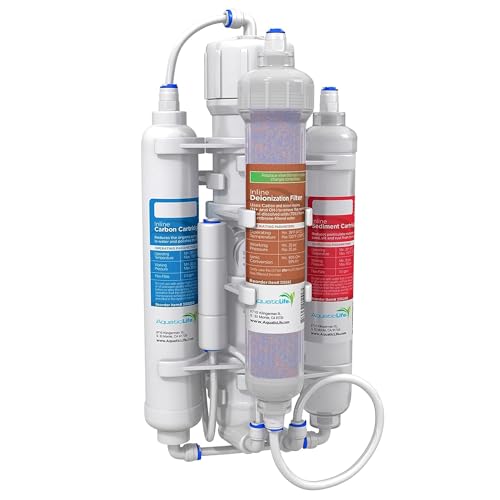
Best for beginner hobbyists with smaller tanks or those testing RO/DI filtration for the first time. This 4-stage unit uses reverse osmosis to remove debris and create cleaner water for aquariums, humidifiers, and fountains. The sediment filter targets dirt like sand and silt, while the carbon block reduces chlorine and odors. Note: chloramines are not removed by this model, so it’s best for systems without chloramines or where additional treatment is planned.
Who this is best for: hobbyists with small to medium tanks who want an affordable entry into RO filtration and straightforward maintenance. Why chosen: compact setup, clear 4-stage filtration, and easy integration into existing plumbing.
Caution: chloramines are not removed; you may need a separate solution if your tap water contains chloramines.
Aquatic Life Twist-In 4-Stage RO/DI System
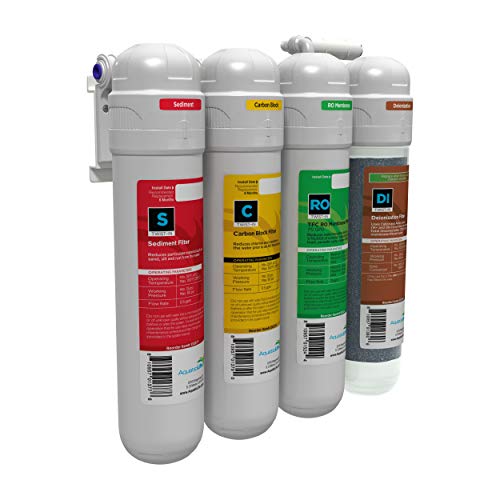
Best for seasoned hobbyists upgrading to higher-purity water with moderate to large tanks. This 4-stage system includes sediment, carbon, RO membrane, and color-changing DI resin, producing up to 75 GPD. It removes dirt, rust, and chlorine to clarify water and reduce stress on aquatic life. Note: chloramines are not removed with this configuration.
Why it’s chosen: higher daily output and DI resin stage provide consistent water quality for more demanding setups. Better for: aquariums with moderate water changes and higher stocking levels where water purity matters.
Limitation: does not remove chloramines; plan for additional treatment if your supply uses chloramines.
Aquatic Life 4-Stage RO/DI System — 100 GPD
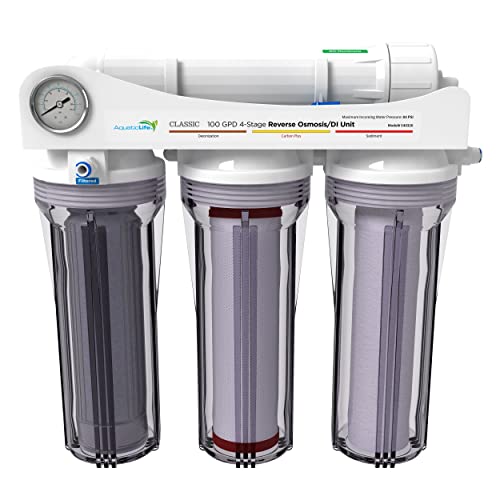
This 100 GPD RO/DI setup provides a comprehensive filtration sequence: sediment, Carbon Plus, 100 GPD RO membrane, and a refillable DI resin stage. It can remove up to 98% of chloramines and 99% of chlorine with the Carbon Plus cartridge, delivering high-purity water for sensitive species. Best for larger tanks or systems needing reliable, daily production.
Best for: larger aquariums or serious hobbyists who require dependable, high-purity water daily. Why chosen: robust filtration chain with DI resin helps maintain low TDS for delicate coral and freshwater species.
Limitation: as with most RO/DI systems, chloramines mitigation may require additional treatment depending on local water supply.
iSpring RCC1DP Tankless RO/DI System

Best for users who want high performance in a compact footprint. The RCC1DP features pump-enhanced filtration and a 150 GPD RO membrane, delivering rapid water production even in low-pressure environments. It uses RO and DI stages to remove a broad range of pollutants, including heavy metals and chloramines, with a focus on aquarium, lab, and dental-grade purity.
Why chosen: high flow rate and reliable purification make it ideal for large tanks or setups requiring consistent water quality. Better for: busy hobbyists or facilities needing quick, pure water supply. Caution: minimalist design can require precise installation for optimal performance.
iSpring RCC1D Tankless RO/DI System

Best for space-conscious setups needing top-tier purity. The RCC1D uses a tankless design and a 150 GPD membrane, delivering consistent water flow without a traditional storage tank. It emphasizes comprehensive impurity elimination and features DI filtration for near-zero TDS. This model suits aquariums, dental facilities, and microelectronics environments that demand steady, pure water.
Why chosen: tankless design saves space and simplifies installation, making it easier to fit into compact utility areas. Choose this if you need high purity with minimal footprint; avoid if you require a stored water reservoir for peak demand.
Buying Guide: Key Considerations For Aquarium RO Systems
- Water source and contaminants: Determine if your water contains chloramines, high TDS, or heavy metals to select a RO/DI system with appropriate DI resin and chloramine handling.
- Flow rate vs. tank size: Larger tanks benefit from higher GPD (gallons per day) systems; smaller tanks can work with 50–75 GPD units.
- DI resin and cartridge life: Systems with DI resin require periodic resin color changes; plan for replacement costs and availability.
- Tankless vs. traditional: Tankless designs save space but may require precise installation; traditional systems offer simple storage for peak demand.
- Maintenance and replacement: Check cartridge availability, replacement frequency, and ease of filter changes.
- Installation considerations: Ensure compatible fittings, allowed water pressure, and a convenient drain for waste water.
Comparative Considerations by Buyer Type
- Small tanks or beginners: Aquatic Life RO Buddie 4-Stage is a straightforward entry point with essential filtration.
- Medium to large tanks: Twist-In 4-Stage and 100 GPD systems offer better daily output and robust filtration.
- High-purity needs and limited space: iSpring RCC1D and RCC1DP provide tankless designs with high GPD and advanced filtration.
FAQ: RO Systems For Aquariums
- What does GPD mean and why does it matter for my aquarium?
It stands for gallons per day and indicates how much purified water the system can produce in a day. Higher GPD helps with frequent water changes and larger tanks. - Do all RO/DI systems remove chloramines?
Not all models remove chloramines; some require an additional treatment. Check the product notes for chloramine compatibility. - Is a DI stage always necessary?
A DI stage further reduces TDS and improves water purity, especially for sensitive species, but some hobbyists may start with RO alone. - How often should filters be replaced?
Replacement frequency depends on water quality and usage. DI resin color changes and cartridge life are typical indicators. - Can I install these systems myself?
Most can be installed with basic plumbing tools, but follow the manufacturer’s instructions and local codes. Complex setups may warrant professional help.