Best Rabbit and Guinea Pig Cage Solutions for Happy, Healthy Pets
Finding the right cage for rabbits, guinea pigs, and other small mammals can be challenging. This guide highlights five well-reviewed options that balance safety, accessibility, and cleanability. Each selection supports dependable housing, easy maintenance, and adaptable setups for indoor or outdoor use. Read on to compare features, materials, and design benefits that matter most when choosing a cage for your small animal family.
Summary of Selected Products
- 12 Panels Small Animal Playpen, 48″ x 24″ x 16″ – VISCOO Store
- 2 Story Solid Wood Rabbit/Bunny Hutch – AMZOSS Store
- 41 Panels Pet Playpen, 35.4″ x 23.6″ x 23.6″ – VISCOO Store
- Rabbit Hutch Bunny Cage With Casters – GUTINNEEN Store
- 2-Story Guinea Pig Cages Wooden Indoor Hutch – AMZOSS Store
VISCOO 12 Panels Playpen For Small Animals

This modular playpen uses durable coated steel panels with a 0.5-inch mesh gap that discourages escapes or trapping. It includes a built-in door for easy access and robust assembly guidance to ensure a secure enclosure. The 48″ x 24″ x 16″ footprint supports multiple pets or a spacious play area while remaining portable for indoor or outdoor use. The waterproof floor mat helps protect floors and simplifies cleaning. It’s designed to be reinforced with connectors, wooden hammers, and zip ties for extra stability in high-activity environments.
AMZOSS 2 Story Solid Wood Rabbit Hutch

This two-story unit uses Finnish spruce and water-based paint, offering a compact yet roomy footprint for two stacked spaces. It includes easy-access doors, multiple entry points, and a removable tray for simple cleaning. The design emphasizes safe, pet-friendly materials and a sturdy, low-profile setup suitable for apartments or homes with limited space. The overall dimensions make it a practical starter kit for small animals, including rabbits and guinea pigs, while maintaining a neat aesthetic.
VISCOO 41 Panels Playpen With Two Doors
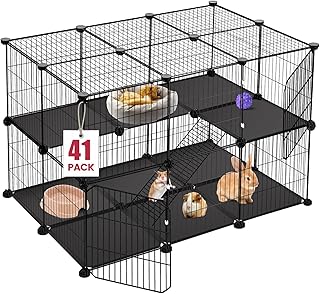
This two-story, customizable playpen provides expanded space and modular flexibility. Featuring durable coated steel panels and two doors, it simplifies entry, exit, and cleaning routines. The included waterproof plastic panels can be used as floor mats or interior partitions to create layered spaces. A caution is advised for heavier pets, since each PP panel has weight limits. DIY expansion is encouraged to tailor the playpen to pet habits and room layout, making it a versatile option for guinea pigs, rabbits, and small animals.
GUTINNEEN Rabbit Hutch On Wheels

This cage emphasizes mobility and all-around support with a stronger iron frame and caster wheels for easy relocation. It features multiple deep, removable trays that reduce cleaning effort and improve waste management. The waterproof roof adds weather protection for outdoor use, while the wheel system enables quick positioning to adapt to changing sun, wind, or temperature. The design aims to balance security and convenience for rabbits, guinea pigs, and similar small animals.
AMZOSS 2-Story Wooden Guinea Pig Cage

This wooden, two-level habitat uses sturdy Finnish spruce with a safe water-based finish. A wide ramp connects the floors, and the top features an openable roof for easy access and enrichment. The deeper, galvanized pull-out tray simplifies cleaning, while a UV-protected wire roof shields inhabitants from sun exposure. The setup accommodates guinea pigs, hamsters, and similar small pets, delivering enhanced play space with reliable durability.
Buying Guide: Key Purchase Considerations For Small Pet Cages
- Material safety and durability: Prioritize corrosion-resistant metals or untreated, pet-safe woods. Check for non-toxic coatings and finishes, especially on indoor cages for children.
- Size and space planning: Ensure the footprint provides adequate room for moving, hopping, and playing. Consider overhead clearance, doorway access, and whether a double-story design adds usable space without crowding.
- Barrier design and escape risk: Look for appropriate mesh or panel spacing (often around 0.5 inches) to prevent finger or paw entrapment. Doors should be secure but easy to operate for caretakers.
- Maintenance and cleaning: Removable trays, waterproof mats, and washable surfaces save time. Replacing or cleaning parts should be straightforward, even with frequent cage cleaning.
- Portability and placement: Cages with wheels or modular construction suit apartments and yards. Consider outdoor suitability with weatherproof roofs and ventilation features for summer and winter use.
- Expansion potential: If you anticipate growing your lineup of pets or introducing additional play areas, choose modular pen systems that can be expanded or reconfigured.
- Assembly complexity: Some cages require tools, during tying or hammering for stability. Ensure you have the necessary hardware and understand the assembly instructions before purchase.
- Pet enrollment and health: Heavier animals or multiple pets require sturdier frames and stronger joints. Ensure weight limits and loading guidelines are followed to reduce risk of collapse or injury.
- Cleaning frequency and costs: Consider the cost and availability of replacement parts such as panels, trays, and mats. A design that minimizes crevices helps reduce grime buildup.
Each selected cage targets different needs—from modular, portable playpens that maximize space to solid wooden habitats designed for multi-pet households. When evaluating options, prioritize safety, ease of cleaning, and how the enclosure fits your living space while supporting active, healthy pets.