Best Motion Activated Feeder Lights for Nighttime Hunting
The best motion activated feeder light depends on whether you prioritize simple green illumination, multiple color options, solar charging, or broader area coverage. The Wildgame Innovations Moonshine is best for a straightforward feeder setup, while the Elusive Wildlife light offers three selectable colors. The two solar two-packs suit buyers lighting more than one location, and the high-output solar light is designed for a larger area.
| Product | Best For | Standout Feature |
|---|---|---|
| Wildgame Innovations Moonshine | Simple feeder illumination | 16 green LEDs and built-in PIR sensor |
| Solar Hog Feeder Light 2-Pack | Solar-powered multi-location setup | Two lights with 20 green LEDs each |
| Elusive Wildlife 3 Color Light | Choosing a light color | Red, green, and amber options |
| Lilbees W300 2-Pack | Soft downward illumination | Frosted LEDs and 120-degree beam |
| Solar Hog Light With Remote | Wider-area lighting and controls | Remote brightness and timer settings |
Wildgame Innovations Moonshine Feeder Light
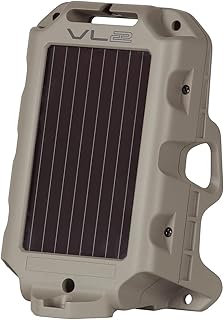
The Moonshine is best for hunters who want a dedicated green feeder light with automatic motion activation. Its built-in PIR sensor turns on the light when movement is detected, and the 16 green LEDs are intended to improve visibility in low-light conditions. The listing describes illumination reaching feeders up to 100 yards away.
The light is described as weather-resistant and includes an integrated solar panel. A switch lets users turn it off when it is not in use. Choose this model if a single-color light and sensor-based operation fit your setup. The listed features do not specify adjustable brightness or selectable light colors, so it is less suited to buyers seeking those controls.
Solar Hog Feeder Light 2-Pack

This two-pack is best for buyers who want solar-powered green lighting for two feeder locations or a spare light. Each light has 20 green LEDs and a PIR motion sensor that activates in darkness when people or animals move nearby. The light turns off after 30 seconds without movement, according to the product details.
The solar panel charges during the day, and the listing recommends allowing 6–8 hours of solar charging before the first test. Its softer green illumination is presented as a way to provide supplemental light without harsh glare. Choose it if automatic shutoff and a two-light package matter. Solar performance depends on receiving sufficient sunlight, so it may be a poor fit for a consistently shaded installation.
Elusive Wildlife Three-Color Feeder Light

The Elusive Wildlife light is best for buyers who want to compare red, green, and amber illumination rather than committing to one color. Its motion sensor activates the light, which gradually increases to full brightness. The gradual ramp-up is described as anti-spook technology intended to avoid an abrupt flash.
Mounting options include magnets for a control box, included carabiner clips for a varmint cage, or predrilled tabs for screws. That flexibility makes it a useful choice when the feeder setup calls for different attachment methods. The listing does not identify solar charging or battery details, so check the product information for power requirements before choosing it for a remote location.
Lilbees W300 Solar Feeder Lights 2-Pack

This two-pack is best for buyers who prefer a diffused green glow and downward-focused lighting. The listed design includes 30 frosted 520-nanometer green LEDs, a 120-degree downward beam, and a PIR sensor positioned to detect movement before animals enter the main beam. The product also identifies its sensor design as pre-trigger PIR logic.
The listing describes a 4,000mAh capacity and dual-zone motion activation. Choose this option if limiting upward light scatter and covering two spots are priorities. Its specifications are detailed, but buyers should confirm that the beam direction and mounting position suit their feeder. The provided features do not state a specific runtime or charging time.
Solar Hog Light With Remote Control

This solar light is best for buyers who want remote adjustments and a larger stated coverage area. The listing claims 12,000 lumens and coverage of 861–1,076 square feet, with a recommended installation height of 3–5 meters. Motion detection activates full brightness, while the light can enter a 30% energy-saving mode when there is no activity.
The included remote is described as offering 25%–100% brightness adjustment and timer options from two to eight hours. Solar charging is listed at 6–8 hours of sunlight. Choose this model if those controls and the stated area coverage match your needs. Its high-output claims do not, by themselves, establish how much light will reach a particular feeder; placement and site conditions matter.
Buying Guide: How To Choose A Motion Activated Feeder Light
Which light color and beam pattern suit your setup?
Green is the common option among these products, while the Elusive Wildlife model also provides red and amber. Consider whether you want to choose between colors or prefer a single-color light. Beam direction matters too: the Lilbees W300 is described as projecting light downward, while other listings emphasize general feeder illumination.
Do you need solar power or remote controls?
Solar-powered models can avoid power wiring, but they need adequate sunlight. Follow the maker’s stated charging guidance and consider whether trees, buildings, or seasonal shade could reduce exposure. Remote controls and brightness settings are available on the solar hog light in this selection; other listed models focus on automatic sensor activation.
How should you compare motion sensors?
Check what happens after movement is detected and how the light behaves afterward. Some lights turn off after a period without movement, one gradually increases brightness, and the Lilbees listing describes pre-trigger sensing. These features affect how the light responds at a feeder. Match them to your preferred setup rather than assuming all PIR sensors work identically.
What mounting and coverage details should you verify?
Before buying, confirm that the attachment method works with your feeder, control box, cage, or other mounting surface. Compare any stated range or area with the location you need to illuminate, but treat coverage figures as listing claims rather than guarantees for every installation. Installation height, angle, and surrounding obstructions can influence the result.
Frequently Asked Questions
What does motion activated mean on a feeder light?
A motion sensor detects movement in its sensing area and switches the light on. The activation and shutoff behavior varies by model.
Are all motion activated feeder lights solar-powered?
No. Several lights here list solar panels, but power details are not provided for every product. Check the individual product information before purchase.
Which option offers more than one light color?
The Elusive Wildlife feeder light lists red, green, and amber color options.
Which product is sold as a two-pack?
The Solar Hog Feeder Light and Lilbees W300 are both listed as two-packs.
How much sunlight do the solar models need?
The solar hog feeder light and remote-controlled solar light listings recommend 6–8 hours of sunlight. Actual charging conditions depend on the installation location.