Best Mineral Blocks for Cows: Five Options for Pasture and Barns
The best mineral block for cows depends on what their diet is missing: a general salt lick is not the same as a targeted supplement. The Kalmbach high-magnesium block is specifically listed for cattle on pasture, while the 50-pound selenium block offers a larger format. Himalayan and red trace-mineral options provide alternatives for livestock owners seeking salt-based licks. Check the label and your herd’s nutrition program before choosing.
| Product | Best For | Key Detail |
|---|---|---|
| Kalmbach High Mag Supplement Block | Pastured cattle | 13.5% magnesium |
| Salt Block Selenium 50LB | Multiple livestock | 50-pound block; selenium in name |
| Himalayan Secrets Compressed Salt Lick | Outdoor use | Compressed 11-pound design |
| Glowyn Himalayan Salt Lick | Rope-mounted access | Six 4-pound blocks |
| Intrepid Red Trace Mineral Brick | Smaller-format salt lick | 4-pound brick with listed trace minerals |
Kalmbach High Mag Supplement Block

Best for: Cattle grazing on pasture when a higher-magnesium supplement is part of the herd’s nutrition plan. The listing specifies 13.5% magnesium, making its stated purpose clearer than that of general-purpose salt licks.
The product is a 40-pound block. Its directions recommend one block for every five to 15 animals, and the listing notes that consumption can vary. That range is useful for planning access, but actual intake may differ between herds and individuals.
Why it was selected: It is the most directly cattle-specific option in this selection, with a stated magnesium concentration and a pasture-use direction. Limitation: The provided product details do not list a full mineral analysis or explain whether it suits a particular forage or region. Confirm the formulation against your herd’s needs.
Salt Block Selenium 50LB

Best for: Livestock owners comparing a large block labeled for selenium supplementation. The listing describes it as suitable for cattle, horses, goats, and deer, and says it is made in the United States.
At 50 pounds, this block is intended to offer extended use for multiple animals and is described for barns, pastures, and salt-block holders. Its broad livestock listing may be helpful for mixed-animal operations, but cattle owners should still check the label for the precise mineral content and feeding directions.
Why it was selected: Its large size and livestock use make it a practical comparison with smaller salt licks. Limitation: The supplied details do not state the selenium concentration or provide a complete ingredient analysis. Do not assume the product provides a specific dose based on its name alone.
Himalayan Secrets Compressed Salt Lick
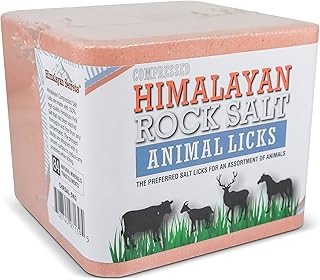
Best for: Buyers looking for a compressed, 11-pound rock-salt lick for livestock or wildlife. The listing says the block is made from Himalayan rock salt and contains 84 minerals and trace elements.
The product’s compressed design is described as resistant to crumbling and suitable for outdoor conditions. It also features smooth edges and a polished surface. These details may appeal to owners who want a solid lick rather than a loose mineral supplement, though the listing does not provide specific mineral amounts for each trace element.
Why it was selected: It combines a mid-sized format with features intended for outdoor use and lists livestock among its intended animals. Limitation: Its features do not establish that it supplies every mineral a cow needs. Compare the label with a cattle-specific mineral program before using it as the herd’s sole supplement.
Glowyn Himalayan Salt Lick on Rope

Best for: Owners who want multiple smaller salt blocks and a rope-mounted format. This listing includes six blocks weighing 4 pounds each and names cattle among the intended livestock.
The listing describes the blocks as natural Himalayan salt, with 98% sodium chloride and 84 trace minerals. It also says the blocks have a thick design intended to resist breakage in weather. For cattle, the rope setup may offer a different way to present a lick, but placement and secure mounting remain the owner’s responsibility.
Why it was selected: The six-block pack supports distributing licks across more than one location or replacing blocks as needed. Limitation: The product is primarily described as a horse lick, and detailed amounts for individual trace minerals are not supplied. Verify that its composition fits cattle use.
Intrepid Red Trace Mineral Salt Brick

Best for: Buyers seeking a smaller, 4-pound red trace-mineral salt brick for livestock or other animals. The listing specifies 84% sodium chloride and 16% trace minerals, giving more composition information than some general salt-l lick listings.
The product is presented as a salt lick that delivers nutrients and supports water intake. Its compact size can be easier to handle than a 40- or 50-pound block, although the supplied details do not give cattle-specific feeding directions.
Why it was selected: The stated percentages and small format make it a straightforward option to compare with larger blocks. Limitation: The details do not identify the amounts of individual trace minerals or establish an appropriate intake for cows. Review the complete label before use.
Buying Guide: How to Choose a Mineral Block for Cows
Does your herd need salt or a targeted mineral?
Start by identifying the purpose of the supplement. A salt lick supplies salt, while a targeted block may be formulated around a mineral such as magnesium. For example, the Kalmbach listing states 13.5% magnesium and identifies cattle on pasture as its use. Do not treat a general salt block as equivalent to a targeted cattle supplement.
What does the label say about mineral content?
Compare the full guaranteed analysis, ingredient list, intended species, and feeding directions. A product name that mentions selenium does not reveal the amount provided. Similarly, a claim about numerous trace minerals does not show how much of each mineral is present. Ask a veterinarian or livestock nutrition professional if you are unsure what your herd requires.
Which block size and format suit your setup?
Large blocks may be convenient for multiple animals, while smaller bricks or multi-packs can be easier to handle or position in several locations. Consider whether the block will be used in a pasture or barn, how it will be kept accessible, and whether its design suits your setup. Follow the product’s directions rather than estimating intake from block size alone.
How should access and intake be managed?
Keep clean water available and monitor whether cattle can reach the block. Consumption can vary, as the Kalmbach listing specifically notes. If animals consume unusually little or much, check placement, product directions, and the overall ration. Mineral supplements should fit the complete diet rather than replace a nutrition assessment.
Frequently Asked Questions
What is the best mineral block for cows on pasture?
Among these choices, the Kalmbach High Mag block is the most specifically directed to cattle grazing on pasture. It lists 13.5% magnesium, but suitability depends on the herd’s diet and mineral needs.
Can cows use Himalayan salt licks?
The Himalayan products listed here name cattle or livestock among their intended animals. Check each product’s label and mineral analysis to confirm it fits your cattle nutrition plan.
Is a selenium block appropriate for every herd?
Not necessarily. Selenium needs depend on the complete diet and other sources of supplementation. Check the block’s exact concentration and consult a qualified livestock nutrition professional before use.
How many animals can share a mineral block?
Use the product’s directions. The Kalmbach listing recommends one block per five to 15 animals, while the other supplied product details do not specify a cattle-to-block ratio.
Does a salt lick replace a complete mineral program?
Not automatically. A salt lick may provide salt or selected minerals, but its composition may not match every herd’s requirements. Compare the label with the ration and seek professional guidance when needed.