Best Milk Replacer Options for Newborn Puppies and How to Choose
Finding the right milk replacer for newborn puppies is essential when a mother’s milk isn’t available. This guide highlights five well-regarded options and explains what makes each suitable for early growth, digestion, and immune support. Below is a quick overview to help you compare products at a glance.
| Product | Brand | Form | Key Benefit |
|---|---|---|---|
| PetLac Powder for Puppies | PetAg | Powder | Easy to digest; complete nutrition for newborn to six weeks |
| Esbilac Puppy Milk Replacer Liquid | PetAg | Liquid | Closest to mother’s milk; ready-to-feed |
| Esbilac Puppy Milk Replacer Powder | PetAg | Powder | Prebiotics, probiotics; easy digestion |
| Goat’s Milk Esbilac Powder | PetAg | Powder | For sensitive digestive systems |
| Vets Preferred Puppy Milk Replacement Formula | Vets Preferred | Powder | Colostrum-enriched; supports immune function |
PetLac Powder for Puppies

PetLac powder provides complete nutrition for puppies from birth to six weeks. It’s designed as a reliable source when a dam is unavailable, supporting proper growth and development with essential vitamins, minerals, and amino acids. The formula is easy to digest and palatable, with prebiotics and probiotics to support gut health and digestion. This option is well-suited for orphaned, nursing, or weaning puppies needing balanced nutrition during early life.
Key features include complete and balanced nutrition for puppies, plus added prebiotics and probiotics for gut health. It’s intended to be a practical option for caregivers managing feedings in the first weeks after birth. The powder form makes preparation straightforward, with the goal of mimicking natural milk as closely as possible.
Esbilac Puppy Milk Replacer Liquid

Esbilac liquid is a ready-to-feed puppy formula designed for newborns up to six weeks old. It provides complete and balanced nutrition that closely mirrors mother’s milk, including vitamins, minerals, and trace nutrients. The liquid form offers convenience for caregivers who prefer not to mix powders and ensures consistent dosing for reliable growth and development.
The formula emphasizes easy digestion with a special fiber blend aimed at supporting gut health. It is described as highly palatable, helping puppies accept feeds readily. This option reduces preparation time while maintaining nutritional integrity during early life stages.
Esbilac Puppy Milk Replacer Powder

This Esbilac powder version provides essential nutrition for puppies from birth to six weeks, nearly mirroring mother’s milk in protein, fat, and carbohydrates. The product includes added vitamins, minerals, and trace nutrients, with prebiotics and probiotics to support immune health and digestion. The powder form requires mixing but is widely trusted for consistent quality and a calm feeding routine.
Designed for easy digestion, the formula integrates a fiber blend to support a healthy gut. It’s a solid option for households that prefer dry mixes and want to customize feeding schedules while ensuring puppies receive comprehensive nutrition during early development.
Goat’s Milk Esbilac Powder

Goat’s Milk Esbilac powder uses whole goat milk protein to support puppies with sensitive digestive systems. It provides the necessary nutritional elements for newborns up to six weeks while focusing on gentle digestion. The formula remains closest to mother’s milk in protein, fat, and carbohydrates and includes prebiotics and probiotics to bolster immunity and digestion.
Its dairy profile may be better tolerated by some puppies compared to cow’s milk-based options. This makes it a preferred choice for infants with delicate stomachs or known sensitivities, while still delivering well-rounded nutrition for early growth.
Vets Preferred Puppy Milk Replacement Formula
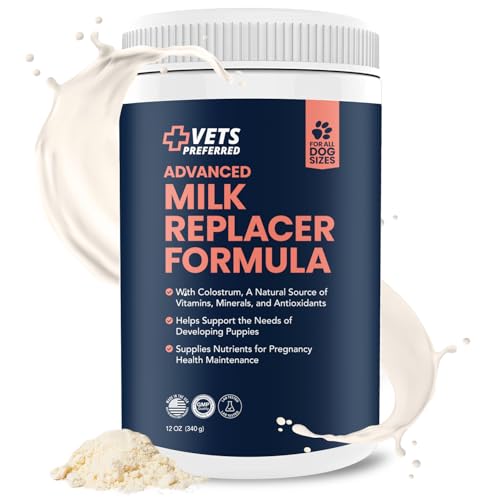
Vets Preferred offers a milk replacer enhanced with colostrum to support immune function and digestive health. This formula is designed to help newborns and nursing dogs alike, providing a balanced mix of protein, fat, and fiber for steady growth and energy. The colostrum enrichment aims to give puppies a stronger start by supporting immune system development in the initial weeks.
As with other powder options, it requires mixing with water to the recommended consistency. Caregivers may appreciate the immune-support angle, especially when exposure to new environments or stress increases the risk of digestive upset in young puppies.
Buying Guide: Key Considerations for Choosing a Puppy Milk Replacer
When selecting a milk replacer, consider the puppy’s age, health status, and whether it’s an orphan or supplement. Several factors influence which product is best for your situation:
- Nutrition profile: Look for complete, balanced nutrition that includes protein, fat, vitamins, minerals, and trace nutrients. Some formulas offer prebiotics and probiotics to support digestion and immunity.
- Digestibility: Easy digestion reduces the risk of gastrointestinal upset. Fiber blends and prebiotic content can aid gut health.
- Form factor: Ready-to-feed liquids save preparation time, while powders offer flexibility and longer shelf life when mixed properly.
- Special needs: For sensitive digestions, goat’s milk-based options or formulas enriched with colostrum may be advantageous.
- Immune support: Colostrum-enriched formulas provide early immune benefits, which can be meaningful for puppies with higher exposure risk.
- Brand reliability: Established brands with veterinary endorsement and consistent supply help ensure quality and availability.
- Feeding regimen: Some products are designed for specific age windows or weight brackets; follow dosing guidelines precisely.
Comparative Considerations
Liquid formulas offer convenience and speed, particularly for busy caregivers or large litters. Powder formulas tend to be more cost-effective and easier to store, with the caveat of proper mixing. For puppies with digestion concerns, goat’s milk products can provide a gentler alternative, though flavor and texture may differ from standard cow’s milk substitutes. Colostrum-enhanced formulas may give puppies a short-term immune edge, especially in high-risk environments. Always consult a veterinarian if you notice persistent diarrhea, vomiting, or failure to gain weight.
Feeding Practicalities and Safety Tips
Maintain clean preparation equipment and follow the manufacturer’s mixing instructions to avoid under- or over-concentration. Use a clean bottle or nipple appropriate for puppy size, and feed at a warm, comfortable temperature. Monitor weight gain, hydration, urination, and stool consistency daily in the first weeks, and adjust feeding frequency as recommended by a vet. If a dam becomes available, gradually transition from formula to natural nursing as advised by your veterinarian.
In summary, the listed products provide a range of options for newborn puppy care. Selecting the right milk replacer depends on digestive tolerance, immune considerations, and feeding practicality for your specific puppy’s needs. The five products featured here cover ready-to-feed and powder formats, as well as formulations designed for sensitive stomachs or immune support, to help you maintain healthy early development.