Best Leash for Training a Dog to Walk: Top Picks for Smooth Leashes and Calm Walks
Choosing the right leash is essential for effective training and enjoyable daily walks. The best leashes for training help curb pulling, provide better control, and reduce stress for both you and your dog. This guide highlights five purpose-built options designed to support training, obedience, and safer walking experiences. Each product is evaluated for handling comfort, durability, and training suitability, so you can pick a leash that fits your dog’s size, behavior, and walking environment.
Summary of selected products
| Product | Brand | Key Benefit | Ideal For |
|---|---|---|---|
| iYoShop Hands Free Dog Leash | iYoShop | Dual padded handles and zipper pouch for training and on-the-go essentials | Medium to large dogs; jogging and running |
| PetBonus Two Point Control Dog Leash | PetBonus | Two control points reduce pulling and tangles | No-pull training; front and back options |
| Mycicy Short Dog Leash | Mycicy | 18-inch training leash for heel positioning | Medium to large dogs; precise control |
| LANNEY Hands Free Dog Leash | LANNEY | Long reach with shock-absorbing bungee and waist pouch | Hands-free training and active walking |
| PetSafe Nylon Leash | PetSafe | Chew-resistant training leash with padded hand wrap | Behavioral training; compatibility with harnesses |
iYoShop Hands Free Leash With Pouch
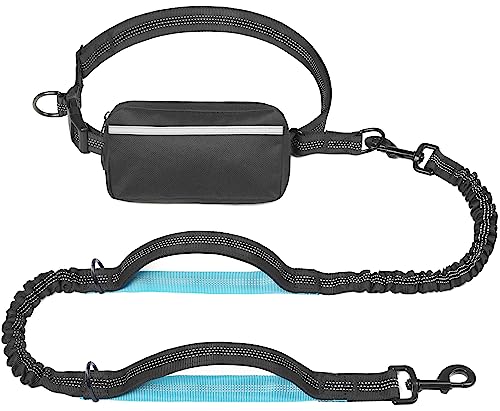
The iYoShop leash combines a hands-free design with dual padded handles and a removable zipper pouch, making it suitable for training sessions and everyday walks. The adjustable length supports loose-leash walking while still allowing you to guide your dog during no-pull training. Its two shock absorbers provide a gentle give to reduce tugging, and the heavy-duty 2″ clip ensures secure restraint. The D-ring supports attaching a training clicker or other accessories, helping structure your training routine.
PetBonus Two Point Control Leash

The PetBonus leash uses a dual-clip system to distribute pulling forces across two points, aiding front control and reducing tangles. The design promotes front-leading training while allowing the user to redirect and manage the dog’s pace. A swivel feature helps prevent twisting, and the soft, padded handle minimizes grip stress during longer training sessions. This leash is versatile for dogs that respond to front-control training and require consistent, low-tangle handling.
Mycicy Short Leash For Heel Training

The Mycicy short leash is designed for precise heel positioning during training. Its 18-inch length offers tight control without excessive slack, making it ideal for service dog training, obedience sessions, or when you need to guide your dog closely. The 1/2-inch nylon rope and a heavy-duty swivel clip provide durability and secure attachment. This leash helps maintain consistent cues and reduces the risk of drifting during training walks.
LANNEY Hands Free Waist Leash

The LANNEY hands-free leash provides a long 51 to 76-inch reach, incorporating a shock-absorbing bungee to ease tugging. Its anti-tear nylon build and 360° rotating metal clasps help prevent tangles and withstand strong pulls from energetic dogs. The upgraded waistband and durable belt buckle support comfortable all-day use, making this leash suitable for long training sessions, jogs, and hikes where hands-free control improves flow and focus.
PetSafe Nylon Leash For Training
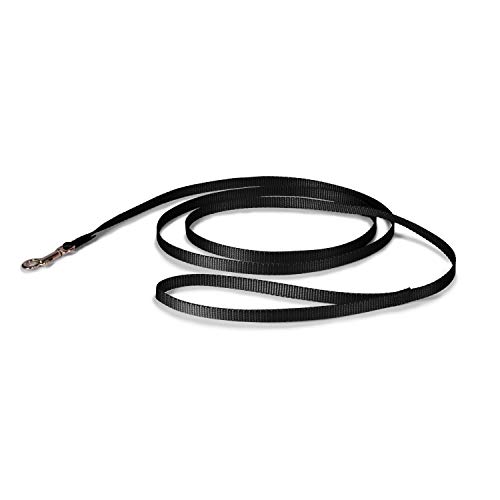
The PetSafe nylon leash emphasizes chew resistance and reliable connection to harnesses or collars for behavioral training. It features a padded hand wrap for comfortable control and a secure clip to ensure quick, dependable attachment. Available in several lengths and widths, this leash provides trainers with a versatile tool for shaping responses, reinforcing calm behavior, and guiding sessions across various environments.
Buying Guide: Key Purchase Considerations For Training Leashes
When selecting a leash for dog training, consider the following factors to ensure effective results and lasting durability.
- Training goals: Front-control leashes, double-clip designs, and hands-free options serve different training needs. Identify whether you want to reduce pulling, improve heel position, or enable long, distraction-free sessions.
- Length and reach: Short leashes promote close control, while longer leashes allow exploration with cues. A mid-length option or a hands-free design can balance flexibility and discipline.
- Handle comfort: Padded or ergonomic grips reduce hand fatigue during intense or lengthy training periods.
- Durability and materials: Look for heavy-duty nylon or rope, reinforced clips, and weather-resistant finishes to withstand daily use and outdoor conditions.
- Safety features: Swivel joints to prevent tangling, reflective threading for visibility, and secure snaps contribute to safer training, especially in low-light settings.
- Compatibility: If you use a harness or specific training tools (clickers, treat pouches), ensure the leash design accommodates these accessories or attachments.
- Maintenance: Removable pouches or washable fabrics simplify cleanup after training sessions or walks in wet conditions.
Depth of evaluation includes: how the leash influences your dog’s behavior during walks, the ease of transitioning between training cues, and the overall comfort for the handler. For dogs prone to pulling, front-control approaches paired with a sturdy leash and consistent reinforcement tend to yield more reliable progress. For dogs needing more guidance, shorter lengths and reinforced clips help maintain a steady pace and clear expectations. Finally, hands-free designs can enhance focus during outdoor training by keeping your hands available for treats, clickers, and signaling movements.