Best Invisible Fences for Dogs: A Comprehensive Guide to Modern Containment Systems
Choosing the right invisible fencing system can help keep dogs safe while preserving outdoor freedom. This guide highlights five top options, detailing how GPS or traditional radio signaling, boundary shapes, durability, and training features work in real-world settings. Whether you have a large estate, a suburban yard, or frequent outdoor adventures, these systems offer varying levels of boundary precision, setup ease, and humane training modes to fit your needs.
Summary Table Of Selected Products
| Product | Brand | Main Benefit | Boundary Type |
|---|---|---|---|
| GPS Wireless Dog Fence System | DJNFGQ | High precision GPS boundaries with flexible circular or free-form shapes | GPS-based, circular or polygonal |
| PetSafe Wireless Pet Containment System | PetSafe | Simple setup, travel-friendly, adjustable correction | Circular wireless |
| PetSafe Stubborn Dog In-Ground Fence | PetSafe | Custom-shaped in-ground boundary with durable collars | In-ground |
| VERSMELO GPS Wireless Dog Fence | VERSMELO | AI-assisted GPS with scalable outdoor coverage | GPS-based, circular |
| RunFence Wireless Dog Fence | RunFence | Combination training collar and fence with extended range | Wireless, adjustable boundary |
GPS Wireless Dog Fence System

The GPS-based fence from DJNFGQ uses satellite signals to locate the dog within a defined area. The collar communicates with GPS satellites to determine location and triggers corrective actions as the dog approaches boundaries. This system supports two boundary modes: a circular fence and a free-form polygon. The circular option quickly creates a standard safety radius from 49 feet to 6,561 feet, while the polygon mode allows multiple vertices to outline irregular shapes, ensuring there are no dead corners in complex terrain. No buried wires are required, making setup fast and adaptable for yards, parks, or farms.
Key considerations for this system include boundary accuracy in open spaces and its flexibility to fit real-world landscapes. The two-mode design helps accommodate everyday routines and larger outdoor environments. The IPX7 waterproof collar ensures durability in wet conditions, and rechargeable batteries simplify maintenance. For households with varying terrain or frequently changing layouts, this GPS approach reduces the need for reinstallation when boundaries shift.
PetSafe Wireless Pet Containment System

The PetSafe Wireless system provides a complete, circular containment area up to 1/2 acre without installing wires along the yard. It’s designed for travel or temporary setups and can be configured in 1–2 hours. The collar offers five adjustable correction levels, a tone-only training mode, and reentry safety features to prevent overstimulation. The waterproof, rechargeable receiver collar fits dogs over six months old and weighs at least 8 pounds, with neck sizes adjustable from 6 to 28 inches. This option emphasizes simplicity and portability for apartment balconies, vacation homes, or weekend getaways.
Pros include quick installation, a broad compatibility range for small-to-medium dogs, and a straightforward adjustment system. Potential limitations relate to boundary confinement area size and reliance on a wireless signal that may be affected by physical obstacles. The absence of buried wire reduces installation time but may require careful placement to maintain reliable coverage in obstructed yards.
PetSafe Stubborn Dog In-Ground Fence

This in-ground kit from PetSafe is designed for challenging dogs and larger yards, offering a custom-shaped boundary up to 1/3 acre with 500 feet of wire. The two-person installation process makes it a suitable weekend DIY project. The system uses a waterproof collar with tone and vibration modes and four levels of static correction, adjustable to a dog’s temperament. Neck sizes range from 6 to 28 inches, ensuring a comfortable fit for most medium and larger breeds. The modular wire approach allows expansion to cover more space as needed.
When evaluating this option, consider yard topology and the complexity of fences you need to install. In-ground systems tend to be stable and less affected by external signals, but require proper wire placement and a longer initial setup. The emphasis on adjustable correction helps tailor training to individual dogs, promoting humane behavior while maintaining a clear boundary.
VERSMELO GPS Wireless Dog Fence

VERSMELO combines a U.S.-made GPS chip with AI to enhance boundary precision and anti-interference performance. The system tracks real-time location and uses a boundary radius adjustable from 33 to 1999 yards (roughly 0.7 to 2,593 acres), making it suitable for farms or expansive properties. The collar provides a safe, gradual correction using sound, vibration, and up to six levels of static stimulation. A safety feature reduces stimulation after two correction cycles to prevent overstimulation, promoting humane training. The setup emphasizes wide outdoor freedom with reliable boundary enforcement, rather than a small yard confinement.
Considerations for this option include the management of large outdoor spaces and how the AI-driven GPS handles urban signal interference. While ideal for open fields, it may be less ideal for compact backyards or dense environments where GPS signals can be inconsistent. Users should evaluate terrain and typical dog activity to ensure the boundary is both accurate and humane.
RunFence Wireless Dog Fence System
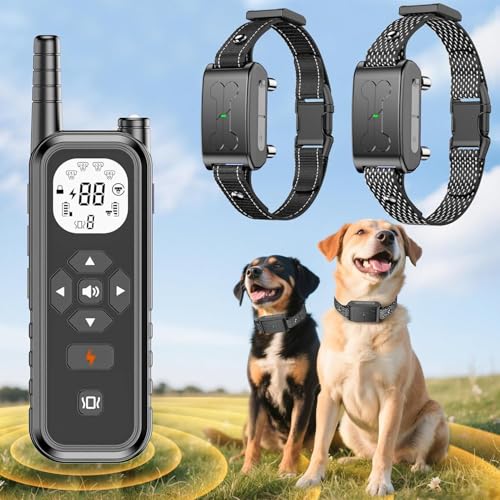
RunFence integrates a 2-in-1 approach, combining a wireless fence with a versatile training collar. It offers 10 distance levels, allowing a boundary range from 30 to 1,300 feet. The collar supports three training modes, enabling tailored training based on a dog’s temperament. The system is IPX7 waterproof, making it suitable for wet conditions and outdoor use. A 1-second response time ensures quick feedback, while the collar’s smart chip maintains a strong signal. A 3800-foot training distance is available in training mode, making this option appropriate for larger yards or open spaces.
In evaluating RunFence, consider your training goals and yard layout. The extended training range and multi-mode collar can help with both boundary conditioning and behavior modification. The waterproof design ensures durability in varied weather, while the portable configuration supports outdoor adventures and travel.
Buying Guide: Key Purchase Considerations And Comparisons
- Boundary technology: GPS-based systems excel in large, open areas with flexible shapes, but may rely on satellite signals. In-ground fences deliver stable performance within a fixed perimeter, though installation is more involved. Wireless systems offer quick setups and portability but can be affected by walls or terrain.
- Boundary shape and size: Circular fences are quick to deploy; polygonal or custom shapes offer precise fits to irregular yards. Consider the shape that best matches your landscape and daily dog activity.
- Correction modes and humane training: Look for adjustable levels of tone, vibration, and static stimulation. A system with progressive correction and a safety shutoff helps prevent overstimulation and promotes humane training.
- Collar durability and fit: Water resistance (IPX7 or higher) and adjustable neck sizes are important for comfort and reliability across different dogs and climates.
- Setup and maintenance: Wireless systems are typically easiest to install, while in-ground options offer stability for long-term use. GPS-based systems require clear satellite access and may come with a higher upfront cost but offer flexible boundary management.
- Environment and scale: For large rural properties, GPS-based or wide-coverage systems may be more practical. For urban yards or apartments, compact wireless kits may suffice and be more cost-effective.
- Expandability: If you plan to cover more space later, choose a system with scalable boundary options and the ability to add more wire or expand the signal range.
All listed products provide a mix of boundary precision, ease of setup, and humane training features. When choosing, align the system with your yard size, terrain, dog temperament, and your preference for ease of installation versus boundary rigidity. Consider whether you value GPS flexibility over traditional in-ground stability, and whether you need portable, travel-ready options for vacations or outdoor adventures.