Best Hay Bag Slow Feeder Solutions for Healthy, Efficient Horse Feeding
Choosing the right slow feeder hay bag can help manage feeding, promote healthier digestion, and reduce hay waste. This article highlights five top options designed for horses, goats, and other grazing animals. Each product emphasizes slow-feed design, durability, and user-friendly features to support steady grazing patterns. Below, you’ll find a concise buying guide and practical considerations to help you compare capabilities and select the best fit for your needs.
| Product | Brand | Key Benefit |
|---|---|---|
| MKO SHUN 4 PCS Slow Feed Hay Net (35 x 31 Inch) | MKO SHUN Store | Large capacity, knotless comfort, weather-resistant |
| Derby Originals Front Web Slow Feeder Hay Bag | Derby Originals Store | Super tough bottom, durable construction |
| MKO SHUN 2 PCS Slow Feed Hay Net (35 x 31 Inch) | MKO SHUN Store | Same slow-feed design with easy filling and hanging |
| 47” x 39” Zip Slow Feed Bag | Clyro | Large zip design, low tangling, reusable |
| Derby Originals Supreme 4-Sided Slow Feed Hay Bag | Derby Originals Store | Patented design, built for easy stuffing |
This selection covers a range of capacities, materials, and opening styles to address different feeding setups—stall, trailer, or pasture. Read on to explore each option, including build quality, feeding efficiency, and maintenance considerations.
MKO SHUN 4 PCS Slow Feed Hay Net for Horses

The 4-piece set features large capacity nets designed to regulate intake while reducing waste. Key specifications include 1.2-inch mesh holes, expanding to 1.5 inches when filled, which slows consumption by about 40%. This mimics natural grazing and supports healthier digestion. The design is weather-resistant, using premium polyester rope that endures rain, snow, and sun without fraying. A knotless weave minimizes mouth abrasion for horses with sensitive mouths, offering smoother feeding during stressful transitions or older ages.
With easy fill-and-hang setup, these nets suit trailer trips, turnout, and stall environments. The knotted-free surface helps prevent muzzle snagging and reduces stress at mealtime. Durability and simplicity are balanced to support long-term use, lowering replacement frequency and enhancing overall feeding management for multiple horses or livestock sharing a single feeding space.
Derby Originals Front Web Slow Feeder Hay Bag

This model emphasizes practicality for busy stables. It holds approximately 2–3 flakes of hay, compatible with Timothy, Orchard, or Alfalfa varieties. The 1.75-inch square openings allow steady access while preventing rapid overconsumption. A standout feature is the Super Tough Bottom, reinforced with overlapping nylon webbing, which preserves freshness by letting dust and debris exit while maintaining bag integrity. The heavy-duty nylon construction supports frequent use and extended lifespans, even in rough environments.
Durability is further enhanced by replaceable hanging straps and snaps, enabling quick maintenance and downtime between cleanings. The design prioritizes easy loading and stable hanging, reducing stray hay on the ground and supporting cleaner stalls. Overall, this Derby Originals option provides a reliable, high-capacity slow feeder that performs in daily horse care routines.
MKO SHUN 2 PCS Slow Feed Hay Net

This 2-piece set mirrors the 4-piece design with identical slow-feed benefits, offering a cost-conscious option for households with fewer horses or separate feeding zones. The 1.2-inch mesh holes expand to 1.5 inches when filled, effectively slowing intake by roughly 40% and promoting sustained grazing. Weather resistance remains a core attribute, backed by a durable polyester rope that resists wear from wind, sun, and moisture. The knotless weave continues to protect delicate muzzles and lips, supporting safer feeding for horses with sensitive mouths.
Designed for convenience, these nets are simple to fill, hang, and reposition around paddocks, stalls, or trailers. The bundles are ideal for rotating feeding locations to minimize waste and reduce management time spent on hay distribution during busy days at the stable.
47” x 39” Zip Slow Feed Bag
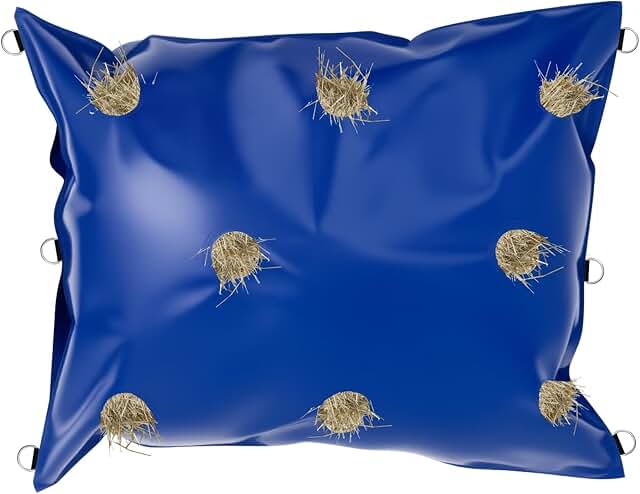
This large zip slow feed bag offers an expansive feeding area, reducing tangling and allowing for versatile hanging or ground feeding. The bag is designed to be reusable and serviceable, emphasizing durability and longevity. Eight triple-reinforced 3-inch holes provide ample access points while maintaining a controlled feed flow. The product notes highlight ease of use for stall and trailer setups, with a focus on reliability and practicality for long-term use.
Users should consider the bag’s size relative to their animals and available mounting space. The zip design helps prevent snagging and simplifies cleaning, while the durable construction supports regular use across multiple seasons. It serves well for large horses, larger livestock, or farms needing a robust feeding solution that minimizes waste and mess.
Derby Originals Supreme 4-Sided Slow Feed Bag

This four-sided design emphasizes efficient hay distribution with a compact footprint. The specified dimensions (22x8x25 inches) accommodate approximately 2–3 flakes, depending on hay type and density. The openings—comprising a mix of 3.5×1.75 inches—are optimized to minimize feeding frustration while encouraging steady intake. Derby Originals emphasizes ease of stuffing, with a focus on user-friendly setup that supports quick loading during busy barn routines. The bag’s construction aligns with both stability and durability, making it a solid option for daily use in stalls or trailers.
Buying Guide: Key Considerations When Selecting a Slow Feed Hay Bag
Material and durability: Look for weather-resistant materials capable of withstanding sun, rain, and cold. Polyester rope and reinforced nylon are common choices that balance strength with gentleness on muzzles.
Opening size and mesh design: Mesh dimensions determine how quickly hay is consumed. Narrower openings slow intake more, while larger openings can work for smaller animals or shorter feeding sessions. Knotless weaves reduce mouth abrasion and are favored for sensitive mouths.
Capacity and fit: Consider the number of animals you feed, stall size, and whether you need hanging flexibility or ground feeding. Larger nets suit busy facilities with multiple horses, but portability matters for trailers and temporary setups.
Durability and maintenance: Durable bags with replaceable parts (straps and snaps) reduce long-term costs. Reusable designs and easy cleaning simplify daily barn routines and hygiene management.
Safety and ease of use: Ensure the design minimizes snagging, has smooth edges, and avoids sharp components that could injure animals. Knot-free or low-friction materials support painless feeding experiences.
Maintenance and replacement: Some bags offer replaceable components or bottom reinforcements for longer lifespans. Consider whether you’re willing to replace parts periodically or invest in a bag with a full, lasting warranty.
Installation options: Stalls, trailers, and paddocks each require different mounting approaches. Check whether the model supports hanging, ground placement, or both, and ensure the setup aligns with your barn layout.
Cost-to-value balance: While price is a factor, prioritize features that improve feeding efficiency and animal welfare. Durable construction and proven slow-feed performance often yield better long-term value.
Overall, the right slow feed hay bag balances feeding control, animal comfort, durability, and ease of use. By comparing opening sizes, materials, and maintenance features, you can select a model that fits your operation’s feeding plan and livestock needs.