Best Food Puzzles for Dogs to Boost IQ and Enrichment
Dogs thrive on mental challenges that mimic problem-solving in the wild. Food puzzles provide slow feeding, stimulation, and rewarding play. This guide highlights five well-regarded options that balance durability, engagement, and safety for dogs of various sizes. Each product is selected for encouraging problem-solving, reducing boredom, and promoting healthier eating habits.
Summary of selected products:
- DR CATCH Dog Puzzle Feeder Toys for IQ Training & Mental Enrichment
- PETSTA Dog Puzzle Toys – Interactive IQ Training & Brain Stimulation
- Potaroma Dog Puzzle Toy 2 Levels – Slow Feeder for All Breeds
- ATDOALL Slow Feeder Dog Bowl – 3 Levels for Multi-Size Dogs
- Outward Hound Nina Ottosson Lickin’ Layers Small – 3-in-1 Puzzle Feeder
| Product | Key Benefit | Best For |
|---|---|---|
| DR CATCH | Breeds mental challenge with slow feeder | Small to medium dogs and cats |
| PETSTA | Multi‑play modes and hidden food rewards | Active dogs who enjoy sliding and seeking |
| Potaroma | Two levels of difficulty with stable base | All breeds, adjustable challenge |
| ATDOALL | Three‑layer maze for extended play | Medium to large dogs seeking cognitive reward |
| Outward Hound Lickin’ Layers | 3‑in‑1 design for slow feeding and licking | Small dogs and puppies |
DR CATCH Dog Puzzle Feeder Toys

DR CATCH offers a sizable puzzle designed to slow feeding while providing an engaging exercise for problem-solving. Its L9.44″ by W9.44″ footprint suits cats, puppies, and small dogs, making it a versatile starter puzzle for households with multiple pets. Sliding sections invite dogs to search for hidden treats, gradually releasing food as they manipulate the toy. The integrated slow feeder function helps regulate eating pace, contributing to digestion and overall health. This toy can serve as a comforting companion during play sessions and training drills, reinforcing positive associations with mealtime challenges.
PETSTA Dog Puzzle Toys
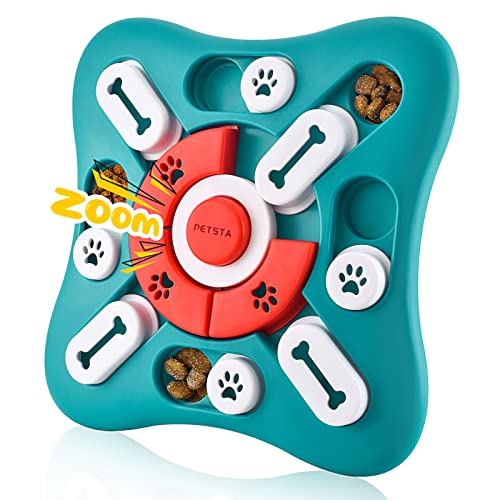
PETSTA’s interactive design emphasizes three distinct play modes with a built‑in squeak button. The 10 inch by 10 inch, 1.3 inch thick board supports a generous play area while presenting a maze that dogs must navigate to unearth hidden treats. The design encourages slow feeding and extended attention spans, which can aid in reducing mealtime anxiety. The combination of circular and linear movement within the maze challenges a dog’s cognitive and physical coordination, promoting a rewarding training experience without excessive force or repetition.
Potaroma Dog Puzzle Toy 2 Levels
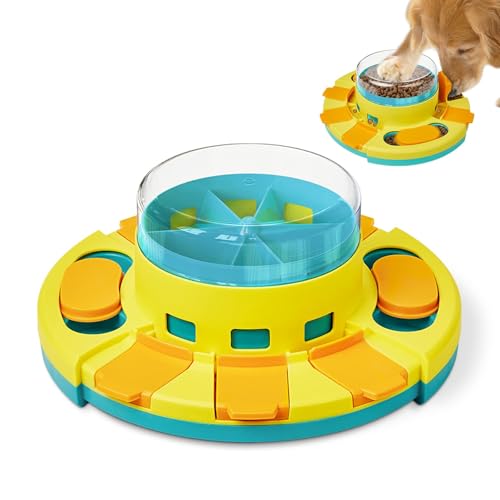
Potaroma features two levels of challenge with a large, transparent base that holds treats and food. Level 1 introduces a simple puzzle, while Level 2 ups the difficulty by requiring the dog to press a top cover to dispense treats downward. The design accommodates both small and large dogs, with a stable base and non‑slip feet to prevent tipping during enthusiastic play. A slow‑feeding orientation helps promote mindful eating and longer engagement, making this a versatile tool for training, enrichment, and healthy dieting strategies.
ATDOALL Slow Feeder Dog Bowl

ATDOALL’s three‑level maze structure slows eating while challenging a dog’s thinking process. The design emphasizes safety with rounded edges and a non‑toxic polypropylene composition. Suitable for medium to large dogs, this puzzle bowl holds a substantial portion of food and can be rinsed easily. The varying levels create a progressive difficulty curve, helping dogs build problem‑solving skills over time while reducing gulping and digestive issues associated with fast eaters. It balances durability with straightforward maintenance for daily use.
BSISUERM Adjustable Treat Dispensing Toy

BSISUERM presents an adjustable treat dispensing toy with two spheres at either end that move within a fixed area. Pushing the toy activates a food dispensing switch, allowing owners to tailor the amount and size of kibble or snacks released. This adjustable feature enables customization to suit different dog breeds, speeds, and dietary needs, promoting sustained engagement. By combining movement, problem solving, and rewards, the toy supports cognitive development and hunting instincts while offering a healthy outlet for play and training.
Buying Guide
Key purchase considerations
- Size and compatibility: Choose a puzzle size appropriate for your dog’s breed, jaw strength, and age. Smaller dogs may excel with compact designs, while larger breeds require sturdier builds and roomier mazes.
- Difficulty levels: Look for toys with adjustable or multiple levels to match your dog’s learning pace and to avoid frustration or boredom.
- Materials and safety: Prioritize non‑toxic plastics or durable composites. Check for smooth edges, secure lids, and parts that resist chewing or accidental ingestion.
- Maintenance: Consider ease of cleaning; dishwasher‑safe parts save time and ensure hygiene after kibble or treats.
- Feeding integration: If using for slow feeding, ensure the design effectively slows consumption without causing frustration or anxiety during meals.
- Multi‑purpose benefits: Some puzzles combine licking, spinning, or sliding with treating, which can support varied enrichment and crate training needs.
- Durability and warranty: For enthusiastic chewers, a robust build and a reasonable warranty can protect against premature wear.
- Care for breed specifics: For dogs prone to food sensitivities, select materials and design features that minimize stress and promote positive reinforcement.
Comparison considerations
- Engagement duration: Some puzzles offer longer play due to multiple modes or layers; others provide quicker challenges suitable for short training sessions.
- Reward accessibility: Toys with hidden compartments or alternating dispensing mechanics encourage continued problem solving, while simpler designs may yield faster rewards.
- Mobility and placement: Consider whether the toy stays put (non‑slip mats) or requires the dog to move across surfaces, which can affect accessibility for older dogs.
- Cleaning frequency: Regular cleaning prevents odor buildup and maintains pet health; check if parts are removable for thorough washing.
By evaluating these factors, you can select a dog food puzzle that aligns with your pet’s temperament, training goals, and household routines. The featured products provide a spectrum of difficulty, durability, and interactive play to support cognitive development, healthier eating habits, and bonding during structured playtimes.