Best Flea Treatment for Puppies 12 Weeks: Safe Solutions for Young Dogs
The market offers a wide range of flea and tick products for puppies as young as 12 weeks. This guide highlights practical, veterinarian‑oriented options that are suitable for small and very young dogs, focusing on effectiveness, safety, and ease of use. Below, you’ll find concise product summaries, a quick comparison table, and a buying guide to help you choose the best fit for your puppy’s needs.
| Product | Brand | Age/Weight Range | Format |
|---|---|---|---|
| Capstar (Nitenpyram) | Capstar | 2–25 lbs | Oral tablet |
| FRONTLINE Plus | Frontline | Small dogs 5–22 lbs (as young as 8 weeks) | Topical |
| PetArmor Plus | PetArmor | Small dogs 5–22 lbs | Topical |
| Hartz UltraGuard | Hartz | 5–14 lbs | Topical |
| Advantage II Small Dog | Advantage | 3–10 lbs | Topical |
Capstar Fast-Acting Oral Flea Treatment

Capstar is a fast-acting oral flea treatment designed for dogs that weigh 2 to 25 pounds. It starts killing adult fleas within about 30 minutes, making it useful for rapid relief during a flea outbreak or before a vet visit. The medication can be given more than once daily if reinfestation occurs, helping to quickly reduce flea numbers in puppies around 12 weeks old. It does not provide ongoing protection, so it is often used in combination with a monthly preventive to maintain control over time.
FRONTLINE Plus Flea & Tick Treatment For Small Dogs
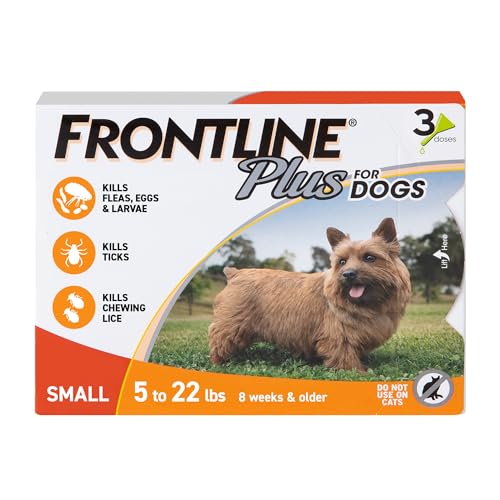
FRONTLINE Plus for small dogs provides a waterproof, monthly topical solution that targets fleas, flea eggs, flea larvae, ticks, and chewing lice. It is formulated with fipronil and (S)-methoprene to disrupt the flea life cycle, delivering rapid action and lasting protection for about 30 days per application. The product is approved for puppies as young as eight weeks and weighs at least 5 pounds, making it a commonly trusted option for early preventive care in puppies around 12 weeks old.
PetArmor Plus Flea & Tick Prevention for Dogs

PetArmor Plus for small dogs combines proven ingredients to kill fleas, flea eggs, flea larvae, ticks, and chewing lice for up to 30 days after application. It is waterproof, allowing protection after swimming or baths, and uses a familiar active formula with fipronil and (S)-methoprene. This option quickly begins to kill fleas within 24 hours, helping to interrupt the flea life cycle and reduce reinfestation in puppies as young as 12 weeks and weighing 5–22 pounds.
Hartz UltraGuard Dual Action Flea & Tick Topical

Hartz UltraGuard offers a dual-action topical treatment designed for year-round use. It claims to kill fleas, flea eggs, deer ticks, and brown dog ticks on contact, with a 30-day preventive window. The formula distributes across the skin via the dog’s natural oils, delivering rapid, full-body coverage. It is suitable for puppies in the 6–14 pound range, providing an accessible option for early flea and tick control in small breeds.
Advantage II Small Dog Topical Treatment

Advantage II for small dogs provides a vet-recommended topical solution that kills adult fleas, flea larvae, and flea eggs. It delivers same-day effectiveness, with protection lasting up to 30 days after application. It is suitable for puppies at least seven weeks old and weighing 3–10 pounds. The product is designed to be easy to apply and to start reducing flea populations quickly, which is critical for puppies with developing immune systems.
Important notes on choosing flea treatments for puppies
When selecting flea control for a 12-week-old puppy, consider weight and age restrictions, safety for young dogs, and whether the product targets a broad range of life stages (eggs, larvae, adults). For puppies, oral medications like Capstar offer rapid kill of existing fleas but do not provide ongoing protection, so pairing with a monthly topical preventive may be necessary. Topicals with basil-like or essential oil-free formulas may be gentler on sensitive skin, though they may require more frequent reapplication. If your puppy has any health concerns or is on other medications, consult a veterinarian before starting a new regimen.
Active ingredients and life-cycle impact
Topical products like Frontline Plus, PetArmor Plus, Hartz UltraGuard, and Advantage II commonly rely on fipronil and (S)-methoprene to kill adult fleas and prevent eggs from hatching. These active ingredients disrupt the flea life cycle, reducing reinfestation risk. Oral options such as Capstar provide rapid adult fleas kill but lack residual protection. Understanding each product’s mode of action helps align choice with your puppy’s environment and exposure risk, such as indoor vs. outdoor living, and whether multiple pets are present.
Safety, application, and administration considerations
For puppies around 12 weeks, ensure the product’s weight range matches your puppy’s current weight. Follow label directions meticulously, including dosage timing and interval. Avoid using multiple flea products concurrently unless advised by a vet, as overlapping active ingredients can lead to overdosing. Topical applications should be applied to clean, dry skin at the recommended site, typically between the shoulder blades or along the back, and kept away from children and pets during the initial hours after application.
Environmental and lifestyle considerations
Consider your puppy’s daily routine and exposure. If you have a yard, frequent outdoor activity, or multiple pets, a broad-spectrum product with long-lasting protection can be beneficial. For households with sensitive pets or those who swim frequently, a waterproof topical may provide more reliable protection. In multi-pet homes, ensure all dogs are treated according to their specific weight and age guidelines to prevent cross-infestation.
Buying guide: key purchase considerations
- Age and weight compatibility: Confirm the puppy’s age (12 weeks) and current weight to match the product’s approved range.
- Onset and duration: Decide whether you need rapid kill (oral tablets) or ongoing monthly protection (topicals).
- Life-cycle coverage: Prefer products that target fleas at multiple life stages (adult, eggs, larvae) for longer-term control.
- Water resistance and activity: If your puppy swims or gets wet often, choose a waterproof topical.
- Safety profile: Review potential side effects and check with a veterinarian if your puppy has health conditions or is on other medications.
- Administration ease: Consider whether you prefer a simple topical application or a chewable tablet.
- Cost and supply: Evaluate the cost per month and the number of doses per package to ensure consistent protection.
In summary, selecting flea treatment for a 12-week-old puppy involves balancing speed of action, duration of protection, and safety for young dogs. The options reviewed above include fast-acting oral doses and reliable monthly topicals, each with its own strengths. Always coordinate with a veterinarian to tailor a program to your puppy’s specific needs and lifestyle.