Best Dog Harnesses and Bikejoring Gear for Pulling
The best setup for a dog pulling a bike pairs a properly fitted pulling harness with a bike attachment designed to manage leash tension and keep the line clear of the wheel. The X-back mushing harness below is the most directly suited to sustained pulling; the other picks are bike-leash systems, not harnesses. A general walking harness is included as a less specialized option, not as a substitute for purpose-built bikejoring gear.
| Product | Best suited for | Type |
|---|---|---|
| Dog Pulling Harness, X Back | Dogs doing pulling sports | Pulling harness |
| Dog Bike Leash With Antenna | Bikejoring with a raised leash line | Bike leash system |
| V2.0-180° Rotating Dog Bike Leash | Riders seeking a detachable, rotating leash | Bike leash system |
| iPetba Dog Bike Leash | Riders wanting a high-mounted attachment | Bike leash system |
| Bolux No-Pull Harness | Outdoor walking and everyday use | Walking harness |
Dog Pulling Harness, X Back

This is the most directly relevant choice for a dog that will pull a bike. Its X-back construction is designed to distribute pressure across the body, and the nylon harness has padding at the neck and ribcage. The listed uses include bikejoring, running, canicross, scootering, and sledding.
Best for: owners of suitably sized dogs, particularly Nordic-type breeds, who need a purpose-built pulling harness. The size L listing gives neck, chest, and back-length measurements and describes the fit as intended for an average dog around 45–50 pounds.
Check before buying: Measure the dog and compare all listed measurements with the size chart. The product is tailored to wolf-like breeds, so the listed size range alone does not ensure a suitable fit for every dog.
Dog Bike Leash With Antenna

This is a bikejoring leash system rather than a dog harness. Its elevated antenna is intended to keep the leash above the front wheel and help reduce tangles. The system combines an elastic bungee with a shock spring to soften sudden pulling forces, and the leash can also be detached for ordinary walking.
Best for: riders who want a raised leash path and a leash that can transition between cycling and walking. The listing describes it for medium and large dogs and says it is compatible with select bicycles and scooters.
Check before buying: Compatibility is not stated for every bike or scooter. Review the product images and confirm the attachment setup suits your equipment. Dogs should be trained before bikejoring.
V2.0-180° Rotating Dog Bike Leash

This bike leash is designed to rotate through 180 degrees, allowing the dog to move from one side of the bicycle to the other. Its listed features include shock absorbers, an adjustable leash, a quick-release mechanism, and a lightweight carbon-fiber handle.
Best for: riders who prioritize a rotating connection and the ability to detach the handle quickly. The rotation is the main distinction from a fixed-position bike leash.
Check before buying: The provided product details do not specify bike compatibility or dog-size limits. Confirm the mounting arrangement and fit for your bicycle and dog before use.
iPetba High-Mounted Dog Bike Leash
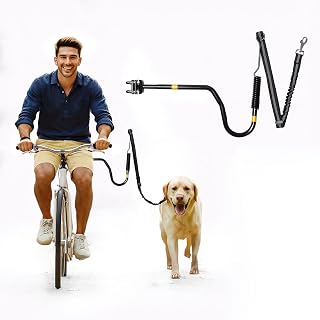
The iPetba attachment uses a high-mounted design intended to keep the leash away from the ground and reduce pedal interference. Its shock-absorbing spring is designed to lessen the impact of sudden pulls. The listing says it can be installed on either side and fits regular, touring, and mountain bikes.
Best for: buyers looking for a hands-free bike attachment with a high mounting point and a stated range of bicycle types. Installation instructions are included, according to the product details.
Check before buying: A bike attachment does not replace a pulling harness. The dog still needs an appropriately fitted harness, and the mounting instructions should be followed.
Bolux Reflective Walking Harness

This adjustable, breathable vest-style harness is described as a no-pull harness for outdoor walking. Its listed features include reflective details and a handle. It is included as an everyday-walking alternative, not as a dedicated bikejoring or sustained-pulling harness.
Best for: owners who want a harness for walks and outdoor handling rather than a specialized pulling setup. Its walking-focused design makes it a different category from the X-back harness.
Limitation: The supplied details do not identify it as a bikejoring harness or describe an X-back pulling design. Choose a purpose-built pulling harness for bikejoring instead.
Buying Guide: How To Choose Bikejoring Gear
Do you need a harness or a bike attachment?
A pulling harness fits the dog and distributes force across its body; a bike attachment connects the leash to the bicycle. They serve different jobs. Choose a harness designed for pulling, then select a bike leash or mount that suits the bicycle and riding setup. A walking harness should not be assumed to perform the same role.
How should a pulling harness fit?
Measure the dog rather than choosing by weight alone. Compare neck, chest, and back measurements with the manufacturer’s size chart. The listed X-back harness provides all three measurements for its size L. A secure, appropriate fit matters because the harness is used under pulling tension.
What bike-leash features matter?
Compare how each system manages the leash near the wheel and absorbs tension. An antenna or high mount is intended to keep the line elevated; a bungee or spring is intended to soften sudden pulls. A rotating connection, quick release, or detachable leash may suit particular preferences, but check installation and bicycle compatibility before ordering.
Is a regular no-pull harness suitable?
Not necessarily. A walking harness may have features for everyday control, but those features do not establish that it is intended for sustained pulling or bikejoring. Select a harness whose listed design and fit are appropriate for the activity.
Frequently Asked Questions
What is the best type of harness for a dog pulling a bike?
Choose a properly fitted harness specifically designed for pulling, such as an X-back mushing style. Check the dog’s measurements against the sizing chart.
Does a bike leash replace a pulling harness?
No. A bike leash attaches the dog to the bicycle; it is separate from the harness worn by the dog.
Why use a bikejoring antenna or high mount?
These designs are intended to keep the leash above or away from the front wheel, helping reduce tangles or pedal interference.
Can any dog start bikejoring right away?
The bike-leash listing advises that dogs should be properly trained before bikejoring. Start with suitable training and gear rather than assuming a dog is ready because a leash is attached.