Best Dog Backpack With Weights for Training, Hiking, and Everyday Outings
If you’re searching for a dog backpack that supports weight adding for training or simulated load-bearing during hikes, these five options are suitable for medium to large dogs. The best pick depends on your pup’s size, comfort, and the type of activities you plan. This guide compares top choices to help you select a pack that distributes weight evenly, remains durable, and stays secure during movement.
| Product | Best For |
|---|---|
| OneTigris Mammoth Dog Pack | Longer hikes, higher capacity |
| ONETIGRIS Y-Shaped Dog Backpack | No-pull design, easy lifting |
| EXCELLENT ELITE SPANKER Nylon Dog Backpack | Balanced weight, side pockets |
| OneTigris Dog Backpack Mammoth (Medium/Small options) | Durable everyday adventures |
| ONETIGRIS Dog Backpack (Medium, Black) | Compact daily use with side pouches |
OneTigris Dog Backpack for Medium & Large Dogs

Best for: Lengthier outings and multi-pocket organization. The Mammoth version offers extra side pouches and robust 1000D nylon for durability.
ONETIGRIS Y-Shaped Dog Backpack No Pull CAMLUS

Best for: No-pull design with front and back D-Ring attachment points and a top grab handle for lifting in/out of vehicles or overcoming obstacles.
EXCELLENT ELITE SPANKER Nylon Dog Backpack
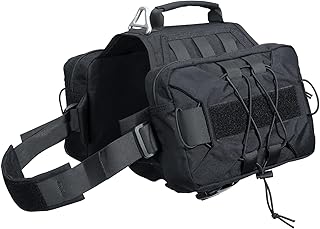
Best for: Balanced weight distribution with roomy side pockets. Choose this if you want easy access pouches for water, treats, and gear.
Note: Look for models with hidden zippers to prevent fur snagging during active use.
OneTigris Mammoth Medium/Large Dog Pack

Best for: Very durable 1000D nylon with breathable mesh lining. Good for lengthier outings and carrying extra water and food via two side pouches.
ONETIGRIS Dog Backpack Medium (Black)

Best for: Compact daily use with two 2″ by 7″ loop panels on each side and an umbrella pocket. Ideal for shorter hikes or daily walks.
Buying Guide
What to consider when choosing a weighted dog backpack
Weight capacity and distribution matter. Look for packs with multiple adjustment points, a secure harness system, and padded straps to minimize load on your dog’s shoulders and spine. A well-ventilated interior and durable exterior help keep your dog comfortable on longer outings.
Fit and comfort for medium to large dogs
Measure your dog’s girth and chest before purchasing. Y-shaped or contoured harness designs tend to prevent chafing and slipping. Check for breathable mesh linings and soft edges around zippers to avoid catching fur during movement.
Durability and materials
Water-resistant 1000D nylon or equivalent fabrics offer durability and easier cleaning. Inspect buckles and stitching for signs of wear. Choose packs with UV-resistant panels for sun exposure during outdoor adventures.
Storage and accessibility
Side pockets, loop panels, and compact compartments help you organize gear, water, and treats. Hidden zippers reduce hair snagging and ensure secure storage during active use.
Weight considerations
Avoid heavy packs for small-to-medium dogs. Select a model that allows incremental load increases and maintains balance so the dog can move freely without pulling or wobbling.
Care and maintenance
Wipe down after trips, air dry, and inspect fasteners regularly. Clean interior linings to prevent odor buildup and keep hardware functioning smoothly.
Best practices for training with weight
Introduce weights gradually, starting with light additions and short sessions. Monitor your dog for signs of discomfort or fatigue. Adjust load distribution if your dog shows signs of strain.
FAQ
- Can a dog backpack include weights for training? Yes, some backpacks are built to accommodate weight inserts or ballast to increase resistance during walks or runs.
- What size pack is appropriate for a medium to large dog? Choose a pack designed for the dog’s chest girth and back length, with adjustable straps to avoid crowding and chafing.
- Are there risks with weighted packs? Overloading can strain joints and muscles. Increase weight gradually and ensure proper fit and balance.
- How should I measure my dog for a backpack? Measure the chest girth at the widest point and the back length from the base of the neck to the hip bone.
- How do I prevent zippers from snagging fur? Look for hidden zipper designs and smooth, snag-free materials.
- Are these packs suitable for daily walks? Yes, several models are designed for daily use with convenient side pockets and light loads.