Best Aquarium Sump Filter Media for Clear, Healthy Water
If you’re aiming for crystal-clear freshwater or saltwater tanks, choosing the right sump filter media is essential. This guide highlights five top options that balance mechanical and biological filtration, suitable for various sump and canister setups. The best pick depends on your tank size, bioload, and maintenance routine. Below, you’ll find quick answers about which media fits your needs, plus a buyer’s guide and FAQs to help you decide.
| Product | Best For | Notes |
|---|---|---|
| Reefing Art Ceramic Bio Filter Media | Medium to large aquariums; diverse water types | Large surface area for robust biological filtration |
| Aquatic Experts Classic Bonded Filter Pad | Pre-filter and mechanical filtration | Cut-to-fit, durable polyester fibers |
| AQUANEAT Bio Sponge Foam Filter Pad | Combo mechanical and biological filtration | Triple-density sponges; cut to fit |
| ALEGI Ceramic Bio Filter Media | Biological filtration in sumps | Reusable ceramic with porous structure |
| hygger Ceramic Bio Filter Media Blocks | High-density bio filtration in large systems | Multi-hole ceramic blocks for max surface area |
Buyer intent tip: Use media with high porosity and a balance of mechanical and biological filtration to minimize weekly maintenance while maintaining water quality. The five options below cover a range of tank sizes and setups, from prefilters to bio-media blocks.
Reefing Art Ceramic Bio Filter Media
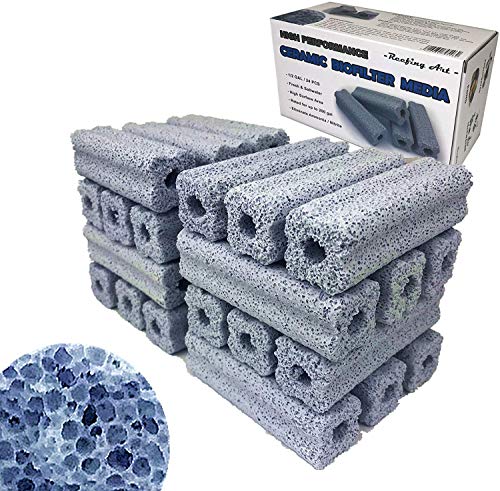
Best for: Medium to large freshwater, saltwater, or pond setups that require robust biological filtration. This media offers vast surface area and a porous internal structure for efficient nitrification and ammonia control. It is labeled for use in freshwater, pond, and saltwater tanks. A single box contains 24 pieces, making it easy to tailor to sump or canister configurations.
Caution: The product data does not specify reusability beyond basic cleaning; plan for periodic replacement to maintain performance.
Aquatic Experts Classic Bonded Filter Pad

Best for: Pre-filtering debris in both freshwater and saltwater systems; ideal for sumps, wet/dry filters, and canisters. The blue and white bonded pad traps floating particles while maintaining water flow to prevent premature clogging. It can be cut to fit most filters and is USA-made, offering a cost-effective alternative to brand-name prefilters.
Limitation: While durable, the pad can require more frequent replacement in tanks with heavy detritus or high bio-loads to preserve flow rates.
AQUANEAT Bio Sponge Foam Filter Pad

Best for: Aquariums needing a balanced mechanical and biological filtration approach. Each set includes three foam densities (coarse, medium, fine) to capture a range of particle sizes while promoting beneficial bacteria growth. The pads are cut-to-fit for sump, wet/dry, canister, or DIY HMF projects and can be reused after cleaning.
Limitation: Performance hinges on regular cleaning to prevent clogging, especially in heavily stocked tanks.
ALEGI Ceramic Bio Filter Media

Best for: Freshwater setups prioritizing long-term biological filtration. This near-porous ceramic media is reusable and can be cracked into pieces to fit various sump or filter configurations. Each box contains 54 pieces, offering flexible sizing for different compartments and flow rates.
Limitation: Ceramic media can be heavier, potentially affecting flow if overpacked; ensure proper sizing to avoid limiting water movement.
hygger Ceramic Bio Media Blocks
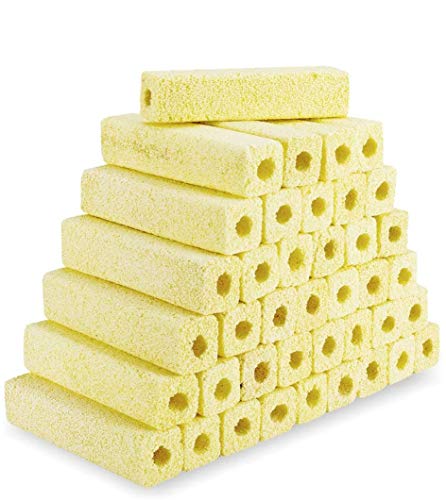
Best for: Large or heavily stocked tanks needing significant biological filtration. These ceramic blocks provide thousands of porous holes, delivering a high surface area for beneficial bacteria to colonize. They are designed for sump and canister systems and come in a multi-pack to supply long-term filtration needs.
Limitation: Ceramic blocks can be slower to rinse clean and may require more maintenance to sustain optimal flow in high-demand setups.
Buying Guide: Key Considerations For Filter Media
- Filtration goals: Decide whether you need primarily biological filtration, mechanical filtration, or a combination. Media with high porosity supports bacteria colonies, while pads and foams excel at debris capture.
- Tank size and bioload: Larger tanks or higher bioload require media with greater surface area or thicker filter pads to maintain water quality.
- Compatibility: Ensure media fits your sump, canister, or DIY filtration setup. Many products are cut-to-fit, but verify dimensions for your compartments.
- Maintenance: Consider ease of cleaning and reusability. Reusable ceramic or foam media can reduce ongoing costs, while prefilters may need periodic replacement.
- Flow considerations: Some media may impede flow if overpacked. Balance packing density with recommended flow rates to avoid stalling filtration.
FAQ
- What is sump filter media and why use it?
It provides mechanical and biological filtration to remove debris and support beneficial bacteria, helping maintain clear water and stable parameters. - How often should media be cleaned or replaced?
Cleaning frequency depends on tank bioload and media type; mechanical media is often rinsed, while biological media is cleaned gently to protect bacteria. - Can media be mixed in the same sump section?
Yes. Mixing mechanical and biological media in separate trays or sections can optimize filtration efficiency. - Which media works best for both freshwater and saltwater?
Ceramic and sponge-based bio media perform well across both, but prefilters like bonded pads are especially versatile for various setups. - Are cut-to-fit media reliable?
Cut-to-fit options help maximize space and compatibility, though ensure a snug fit to avoid bypass and flow restrictions. - Is reusing media safe?
Reusability depends on material; rinsing or soaking in tank water can often restore some media, but inspect for wear or breakage before reuse.