Best Slow-Release Fish Feeders for Vacations and Daily Feeding
The best slow-release fish feeder depends on how long you will be away and how your fish eat. Tetra’s gel block is designed for tropical fish and feeding periods up to 14 days, while Aqueon’s block is a straightforward seven-day option. Atlantic Rush offers blocks with seven- or 14-day durations, and the DXOPHIEX dispenser suits buyers who prefer scheduled portions over a food block. Match the feeder to your fish, tank setup, and time away.
| Product | Best For | Feeding Approach |
|---|---|---|
| Atlantic Rush 14-Day Feeder | Longer absences | Block, up to 14 days |
| Aqueon Vacation Feeders | Short trips | Seven-day block |
| Tetra Vacation Food | Tropical fish | Nibble-released gel block |
| DXOPHIEX Automatic Feeder | Scheduled feeding | Automatic dispenser |
| Atlantic Rush 7-Day Feeder | Weekend trips | Block, up to seven days |
Atlantic Rush 14-Day Vacation Feeder

This two-pack of vacation feeding blocks is best for fish owners planning an absence of up to 14 days. The listed features also describe a seven-day feeding option, so it can suit shorter trips as well. The block format requires no electricity or batteries, which makes it a simple alternative to a powered dispenser.
The product is described for betta fish, goldfish, and tropical species, and its block design is said to fit most aquariums. It was selected for its stated duration choices and broad intended fish range. Check that the package’s feeding period fits your travel plans; the listed maximum is 14 days.
Aqueon Vacation Feeders 7 Day

Aqueon’s seven-day feeder is best for a short trip when a one-week feeding period matches the planned time away. Its listed features emphasize nutritious ingredients that fish are naturally attracted to, along with a formula intended to help bring out their colors.
The product is also described as helping fish use more of what they eat and create less waste. It was selected as a simple short-duration option with food-related features stated by the manufacturer. Choose this if a seven-day block suits your schedule; avoid relying on it for an absence longer than its stated period.
Tetra Slow-Release Feeder For Tropical Fish
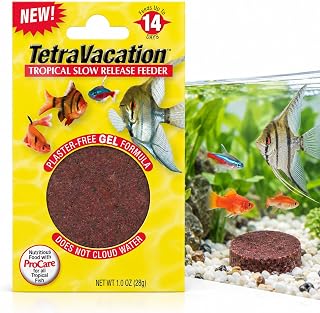
This Tetra gel block is best for tropical fish owners seeking a vacation feeder designed to last up to 14 days. Its listed feeding method is distinct: the block is designed not to dissolve on its own, and food is released when fish nibble it. That makes it a relevant choice for fish that will readily feed from the block.
The product features Tetra’s ProCare formula, which is described as supporting fish immune systems. It was selected for its clearly stated duration and nibble-based release. A key limitation is that food release depends on fish nibbling the block, so consider whether that feeding behavior suits your fish.
DXOPHIEX Automatic Fish Food Dispenser

Choose the DXOPHIEX if you want scheduled dispensing rather than a slow-release block. Its settings allow automatic feeding every eight, 12, or 24 hours, with a manual feeding option available. This makes it best for buyers who want recurring feed times, including when they are home as well as when they are away.
The dispenser can use two AA batteries or the included USB cable, and the listed features say the batteries can provide backup if home power is interrupted. Two mounting methods are described: a tank-edge bracket for aquariums without a hood and a funnel base for a hood. Unlike a block, it requires a power source and setup.
Atlantic Rush 7-Day Vacation Feeder

This Atlantic Rush block is best for weekend trips and other absences of up to seven days. The listed features identify it for betta fish, goldfish, and tropical species, and state that it requires no electricity or batteries. Its block format is a simple choice for owners who do not need the longer duration of a 14-day product.
It was selected as a shorter-duration companion to the brand’s 14-day option. Check the stated feeding period against the time you will be away, and do not treat a seven-day product as a substitute for a longer-duration feeding plan.
Buying Guide: How To Choose A Slow-Release Fish Feeder
How long will you be away?
Start with the length of your trip. A seven-day block is intended for shorter absences, while the Atlantic Rush 14-day option and Tetra block are listed for periods up to 14 days. Treat those durations as product claims, not as a reason to exceed the stated feeding window. If your trip is longer, arrange an appropriate feeding plan rather than assuming one block will last longer than specified.
Should you choose a block or an automatic dispenser?
A block is a low-complexity choice that does not require batteries or household power in the case of the Atlantic Rush products. Tetra’s block releases food when fish nibble it. A dispenser such as DXOPHIEX provides scheduled feeding intervals and manual feeding, but requires batteries, USB power, or both. Choose based on whether a food block or timed dispensing better suits your setup and routine.
Which fish and tank setup should you consider?
Check the product’s stated fish types and tank-fit information before choosing. Atlantic Rush lists bettas, goldfish, and tropical species and says its block fits most aquariums. Tetra’s listed product is for tropical fish. For the DXOPHIEX dispenser, compare its two mounting options with your aquarium: tank-edge bracket or hood-mounted base.
Will the fish eat the released food?
Feeding method matters. Tetra’s block releases food as fish nibble, so fish must interact with it. Aqueon highlights ingredients fish are naturally attracted to, but the available product details do not specify a release mechanism. Consider how your fish normally feed and follow the product’s directions.
Frequently Asked Questions
What is a slow-release fish feeder?
It is a food block or feeder designed to provide food over time, often while an owner is away. Some blocks release food as fish nibble, while automatic dispensers release food on a schedule.
How long can a vacation fish feeder last?
It depends on the product. The options here include feeders listed for seven days and blocks designed for up to 14 days. Follow the duration stated for the specific product.
Are slow-release blocks and automatic feeders the same?
No. A block provides food through a time-release or nibble-based design. An automatic feeder dispenses food at programmed intervals and may need batteries or a power connection.
Do fish need to nibble a feeder block?
It depends on the block. Tetra states that its gel block releases food when fish nibble it and will not dissolve on its own.
Which option is best for a seven-day trip?
A feeder specifically listed for seven days, such as Aqueon’s or Atlantic Rush’s seven-day block, is the closest match among these choices. Confirm the directions and intended fish type before use.